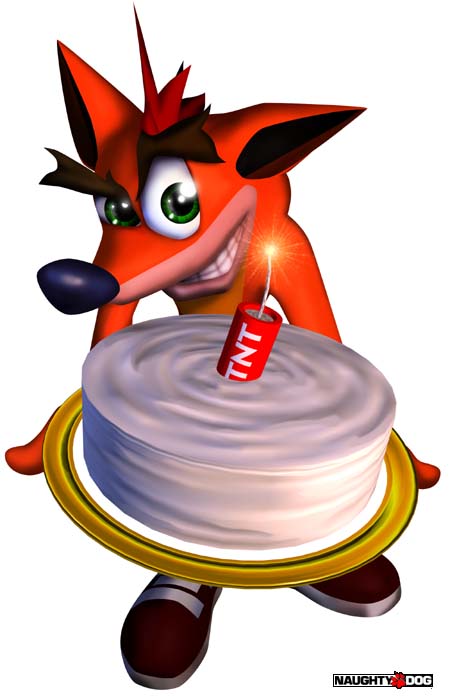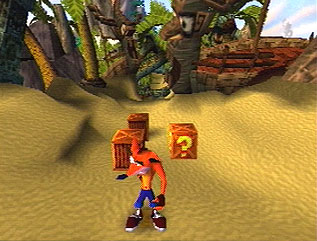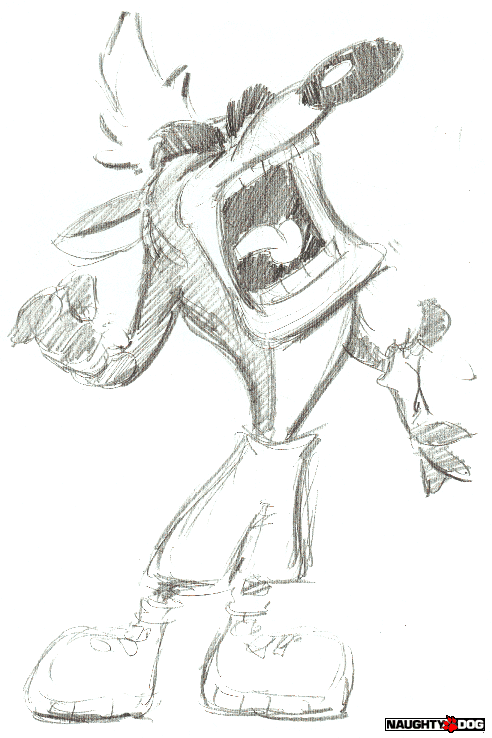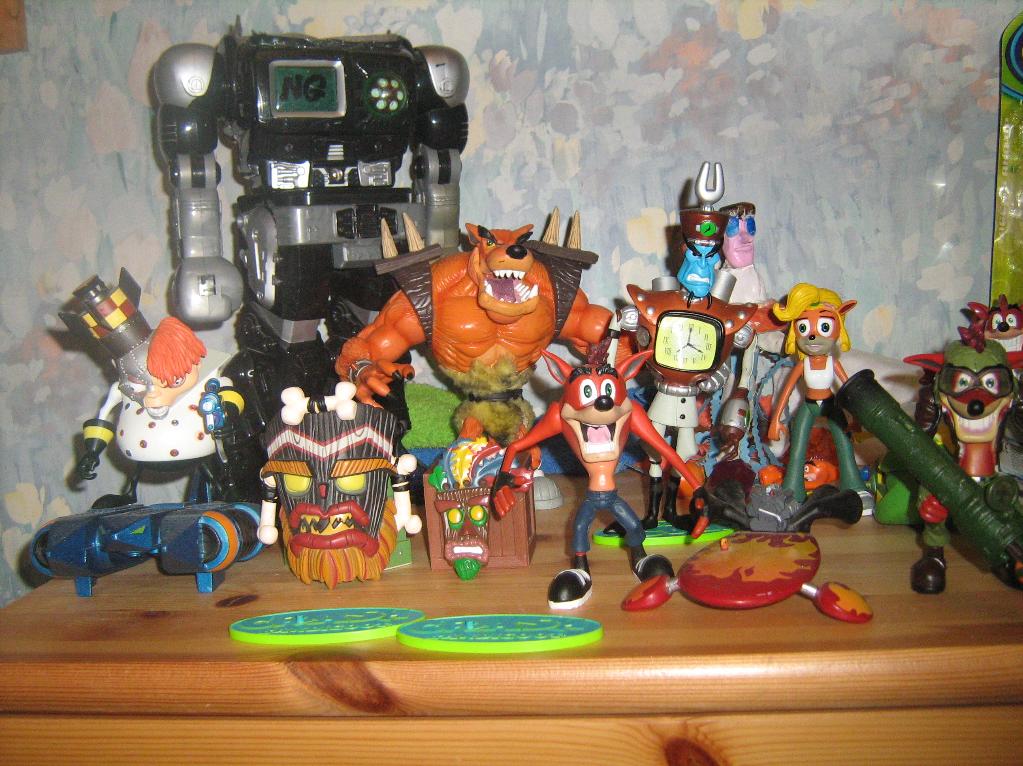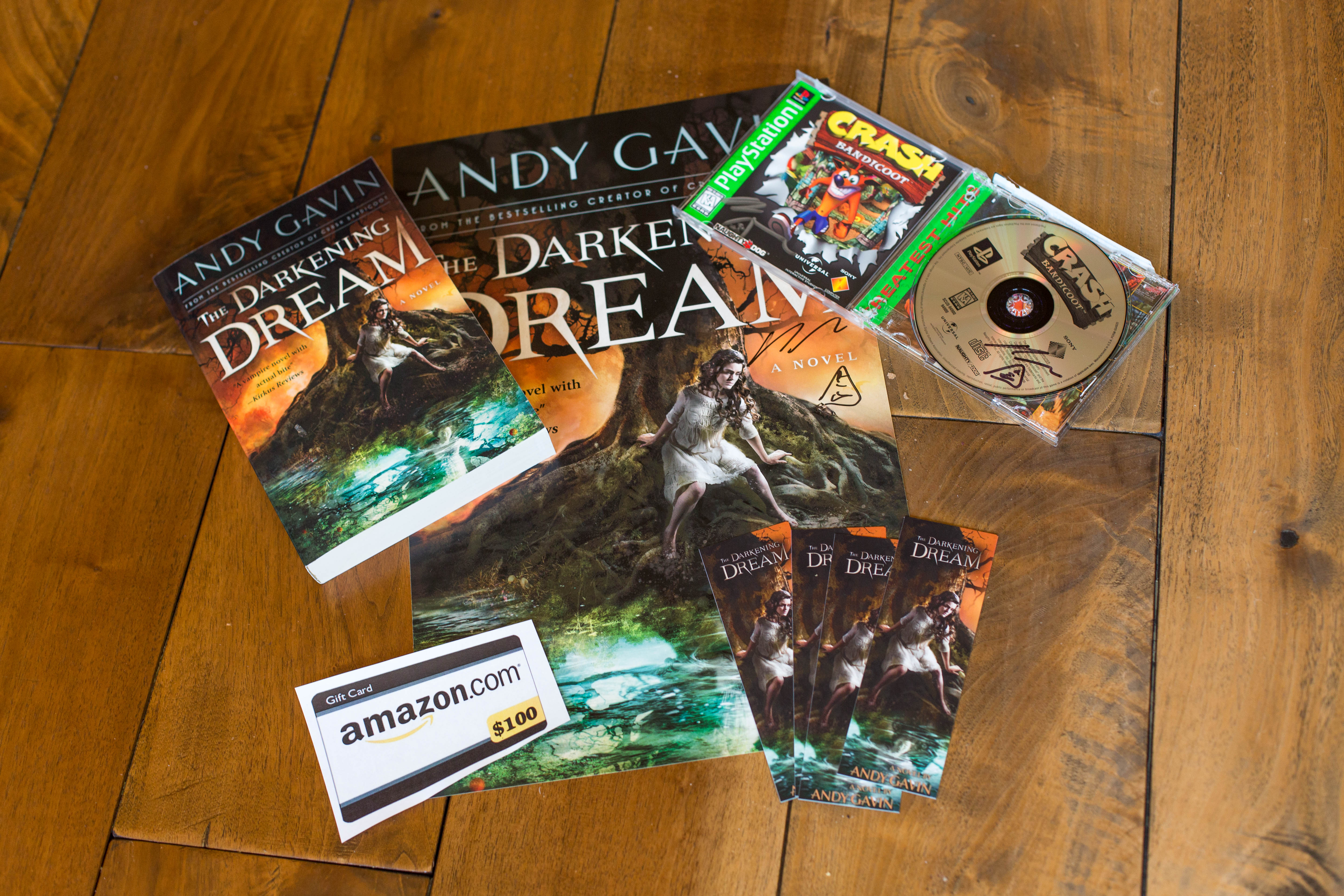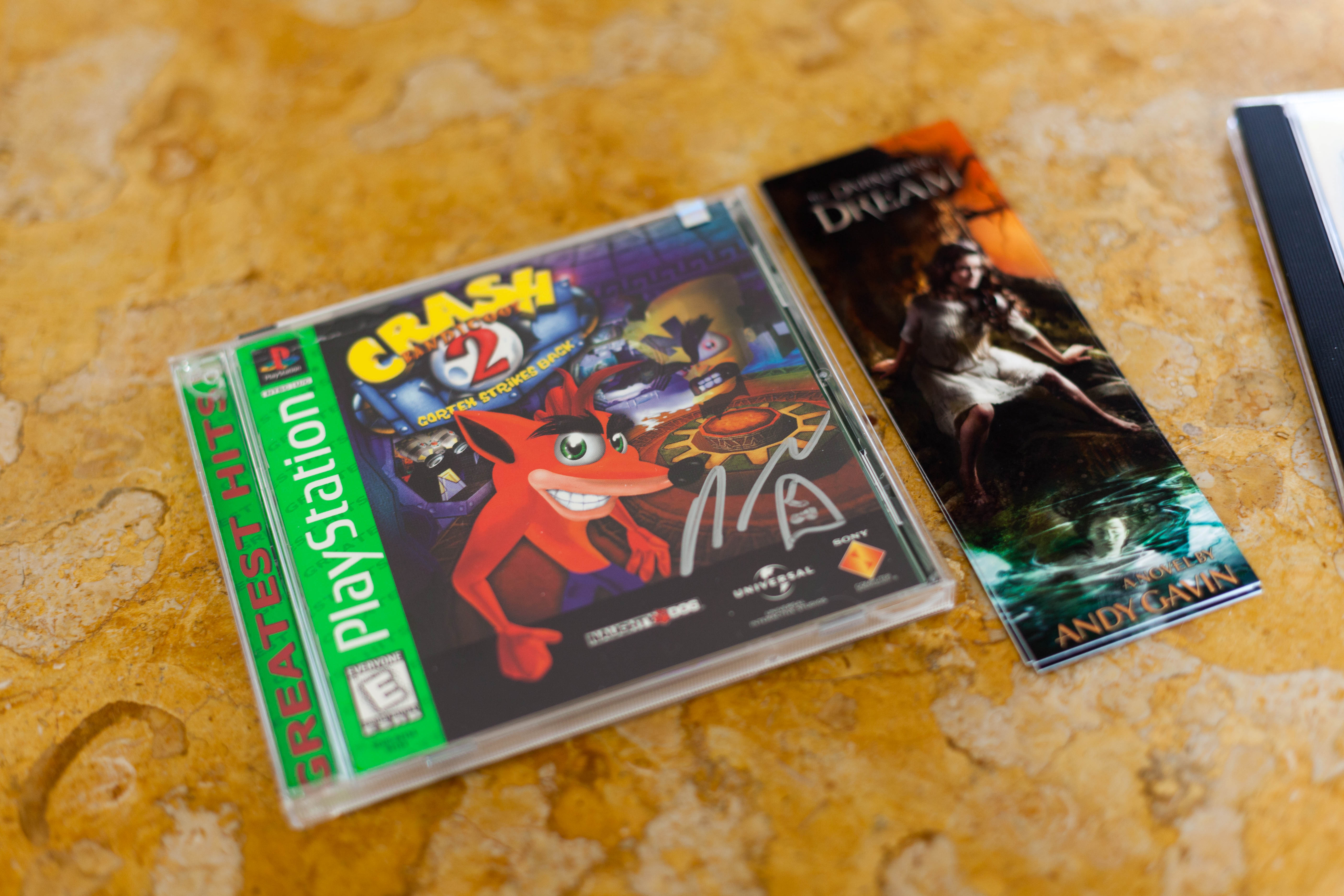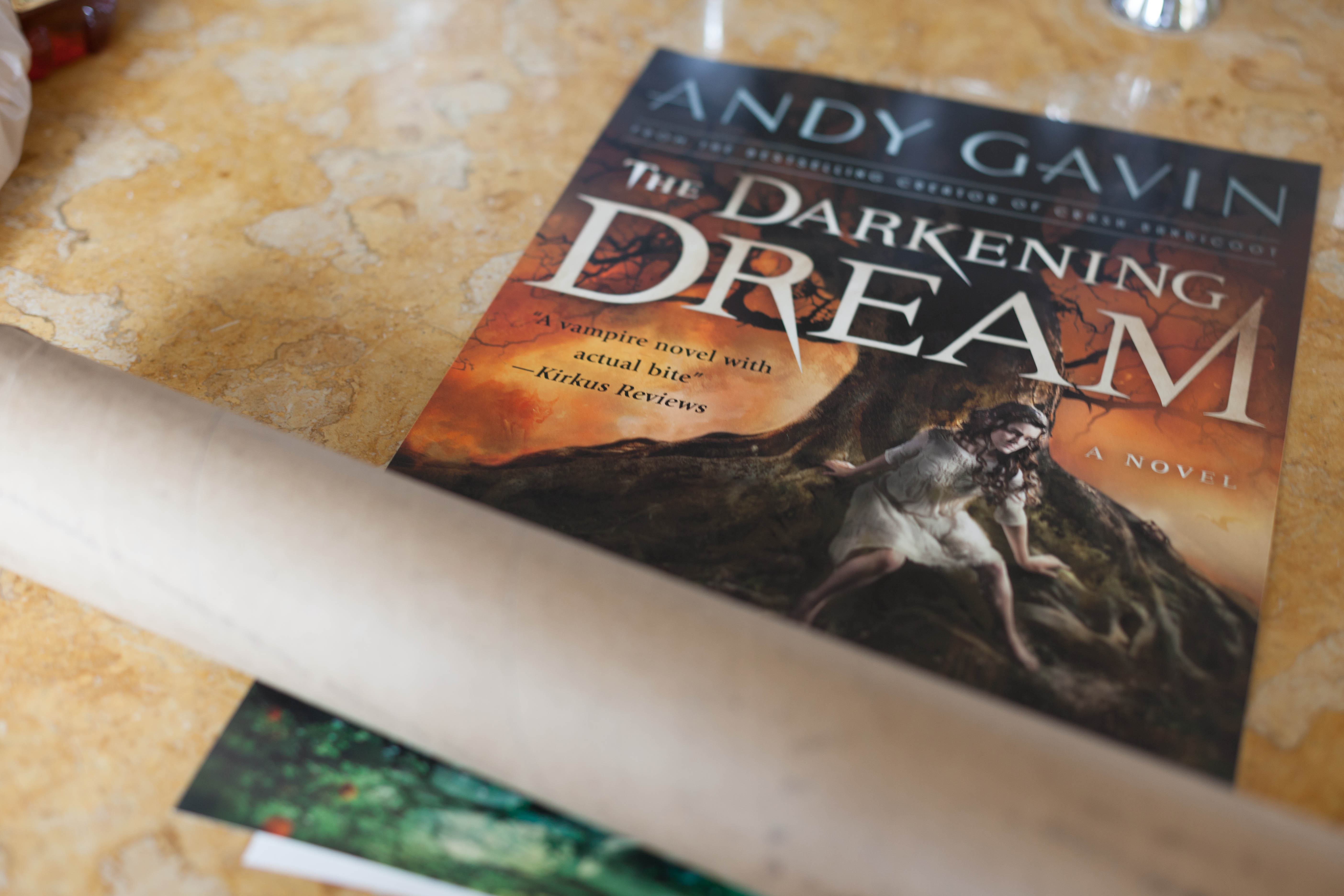
Crash super fan Matt Wallace is auctioning off various Crash Bandicoot swag for charity on e-bay so collect and know your cash is going to a good cause:
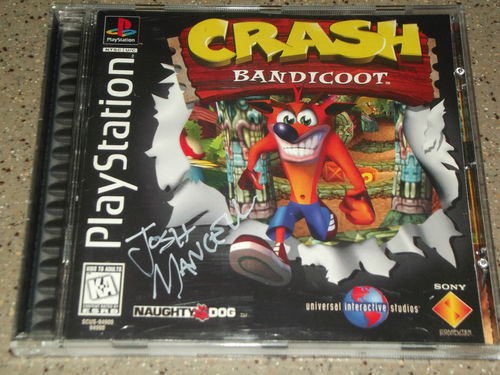
A Crash Bandicoot signed by Josh Mancell (the composer)
Crash super fan Matt Wallace is auctioning off various Crash Bandicoot swag for charity on e-bay so collect and know your cash is going to a good cause:
A Crash Bandicoot signed by Josh Mancell (the composer)
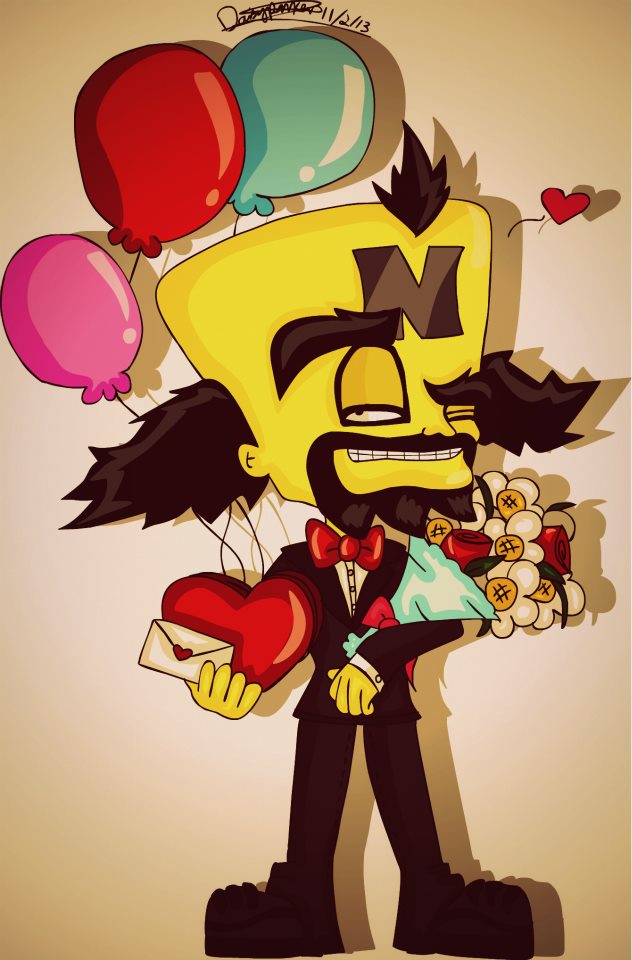
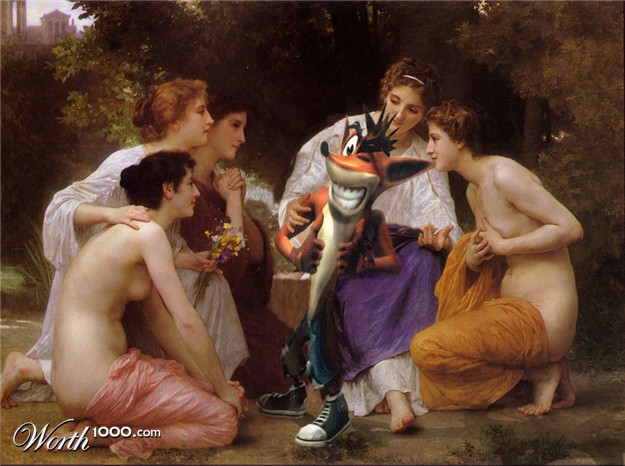
In honor of Valentines, I share with you both a cute fan pic, courtesy of die hard fan Daisy Parker, and fan Aaron White’s latest masterpiece stop motion Crash Bandicoot fan video: Rise of the NeoBots.
And the best thing — which makes this oh so apropos — is that they’re a couple!
Enjoy!
This Crash Bandicoot fan tribute video by 18 year-old Mat Hill is some really good fun.
“Homebrew” visual effects have come a long way since I was a kid. Hey, Hollywood visual effects too! Mat did a great job inserting the game elements here. And all very much in the tongue-in-cheek spirit of Crash. Enjoy!
| If you liked this post, follow me at:
My novels: The Darkening Dream and Untimed Latest hot post: WOW Endgame Analysis! |

Game Shop is a cute little episodic SitCom that takes place in a mall video game store. Episode six below is all about none other than Crash Bandicoot!
The production even invited me to cameo as the guy talking about Crash at the end, but alas, I was out of town for the holidays. /cry
| If you liked this post, follow me at:
My novels: The Darkening Dream and Untimed Latest hot post: WOW Endgame Analysis! |
Since I’ve created thirteen video games and written two novels I’m often asked how the process compares between the two. This is a complex topic, but here goes one stab at it, focusing on the generation of the idea.
Both games and novels start with a basic idea, and it’s essential to focus on what’s important. In both cases, this is a creative process, imagining something blurry and only partially formed that calls out to you.
Games are about gameplay, so this is then a question of gameplay genre. Not the Horror vs Mystery type of genre, but what kind of game is it. Generally you start with one of the proven gameplay types: Platformer, shooter, driving game, sports game, etc and then try to bring something new to the table. For Crash Bandicoot, this was “character platform game in the vein of Donkey Kong Country, but in full 3D” (there were no 3D platform games when we started).
With novels, the core idea is also genre, but the meaning of this is different. In starting The Darkening Dream, I had this image come into my head – and some might consider me disturbed – of a dead tree silhouetted against an orange sky, a naked body bound to it, disemboweled, and bleeding out. The sound of a colossal horn or gong blares. The blood glistens black in the sunset light. Bats circle the sky and wolves bay in the distance. But sacrifice isn’t just about killing. It’s a contract. Someone is bargaining with the gods. Complex ideas are the intersection of multiple smaller ideas. To this I brought a desire to reinvent the classic Buffyesque story of “a group of teens fight for their lives against a bunch of supernatural baddies trying to destroy the world.” But the twist is that I wanted to ground all of the magic and supernatural in “real” researched historical occult. This defined the book as a kind of supernatural thriller from the get go.
Part 1 gives you a core, or germ, of the project, but to start moving with it you need setting.
Again, looking at The Darkening Dream I had this disturbing image in mind. This was a vampire moment, but not exactly your typical one. For years, I’d been noodling on my own private vampire mythos, grounded in a kind of religio-historical thinking. Coppola’s Dracula, for example, has Vlad’s dark power grounded in rage and the Christian god forsworn. But I liked the idea that the most ancient of vampires was far older than Christ, perhaps older than civilization itself. This got me thinking about Neolithic religion. Pre-civilized peoples were essentially shamanistic. The shaman (sometimes called a Witch Doctor) interfaces between the people and hidden powers, both wondrous and terrible. What if one of these men, millennia ago, struck a dark bargain: blood for life. And so was born the idea of the vampire blood gods, dark deities of old forests, of sacrifices bleeding on trees, of gnashy gnashy teeth, slick with blood. This held the key to a ancient vampire explanation grounded in belief. Gods created and fed on faith, instead of the other way around. And the blood gods are not alone. Other ancient gods might still linger, diminished, but still powerful. There seemed a natural synergy between their fate and the syncretistic quality of human religion. As the belief changes, so does the object of said belief.
This meta-idea is very complex, a kind of world setting rooted in history, but reaching back to basics, novels are fundamentally about protagonist and the drama generated by the obstruction of their desire by opposing forces (often antagonist). I tend to think of the antagonists first, but this is a little backward. I knew I wanted a teenage girl, mostly for reasons of contrast with these sinister villains. She too, should be a dabbler in some school of occult-religious power. I like the idea of magic involving hard work and study, call it bookworm power, so I conceived of this studious girl, kind of an older Hermione Granger, daughter of a scholar father with a hidden past. As a heroine, she seeks to use her growing skills to “do the right thing” but all such power if fraught with danger, and her naivety gets her in way over her head.
This magical-religious thinking lead me to a conflict between the old (superstitious?) way of thinking and the modern (technological?) world. I was drawn to a number of cusp points, but settled on the eve of World War I. That war changed the human political landscape, completing the process of casting down King and Church that had been ongoing since the Reformation. It also provided an era with significant room for sequels (WWI, WWII, cold war, etc.) and a freedom from cheap plotting shortcuts like mobile phones and the internet.
Once you work out the basic creative concept for a big project, the rest of the ideas tend to flow outward from these first principles.
In world of The Darkening Dream I drew on historical and religious settings, people, magics, and sects to provide allies and enemies, creating their motivations out of their own peculiar frameworks. With Crash, the cartoon style of the world and the practical needs of the platform game drove decisions. Platform games (and many other game types) have Bosses and Sub-bosses. If Neo Cortex is the boss, then he needed henchmen (mutated animals and lab assistants) and middle management (the various Sub-boss animals). His island needed varied settings (read variety), but it was a jungle island, so this led us to island-compatible settings like beach, jungle, caves, etc.
In previous posts I discussed the differing importance of story to novels and video games, the origins of the magic in The Darkening Dream, and the history of Crash Bandicoot. Sometime in the future, I’ll probably continue this series by talking about production itself.
One of Crash’s more dedicated fans — by the name of Aaron White — used the action figure toys to create this crazy little stop motion fan film set in the Crash Universe. Production values might not make James Cameron jealous, but it sure looks like he put a lot of soul into it. Ray Harryhausen eat your heart out!

The Darkening Dream$0.99 sale and giveaway week is over and was a resounding success. It’s time to announce the winners:

Cool Name Award:But even with the sale over, you can still:
The official Rafflecopter widget is here:
a Rafflecopter giveaway
As the Nineteenth Century gives way to the Twentieth, modern science and steel girders leave little room for the supernatural. But in dark corners the old forces still gather. God, demon, and sorcerer alike plot to regain what was theirs in Andy Gavin’s chilling debut, The Darkening Dream.
1913, Salem, Massachusetts – Sarah Engelmann’s life is full of friends, books, and avoiding the pressure to choose a husband, until an ominous vision and the haunting call of an otherworldly trumpet shake her. When she stumbles across a gruesome corpse, she fears that her vision was more of a premonition. And when she sees the murdered boy moving through the crowd at an amusement park, Sarah is thrust into a dark battle she does not understand.
With the help of Alex, a Greek immigrant who knows a startling amount about the undead, Sarah sets out to uncover the truth. Their quest takes them to Salem’s brutal factory workrooms, on a clandestine maritime mission, and down into their foe’s nightmarish crypt. But they aren’t prepared for the terrifying backlash that brings the fight back to their own homes and families. Can Alex’s elderly, vampire-hunting grandfather and Sarah’s own rabbi father help protect them? And what do Sarah’s darkening visions reveal?
No less than the Archangel Gabriel’s Horn, destined to announce the End of Days, is at stake, and the forces banded to recover it include a 900 year-old vampire, a trio of disgruntled Egyptian gods, and a demon-loving Puritan minister. At the center of this swirling conflict is Sarah, who must fight a millennia-old battle against unspeakable forces, knowing the ultimate prize might be herself.

We interviewed Andy Gavin, the co-founder of Naughty Dog (with Jason Rubin) and creator of Crash Bandicoot. We asked Andy how he got in to the industry, about the inspirations, motives and ideologies behind Crash Bandicoot – one of the games industries seminal characters, and on on what makes a good videogame character. He also told us about the entirely different culture and ethos he built up at Naughty Dog – which meant putting the player first. We also asked him to reflect on his successes and ‘failures’ at Naughty Dog, about what he thinks of the company now and about his future plans. Today, Andy has turned his attention to writing – and is now an established novelist – so we also asked him about what he’s reading, and what he’s working on right now.

Just some of the highlights from this in-depth interview…

What inspired you to start Naughty Dog – how did you get in to the games industry?
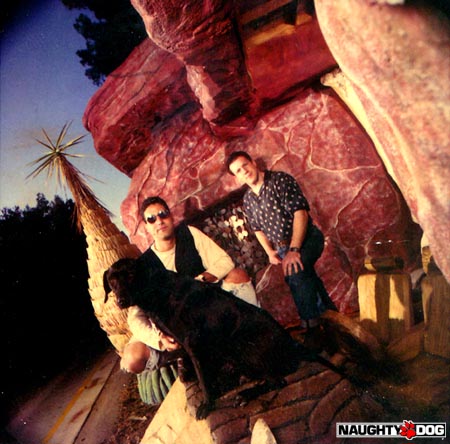
In the 1970s I was hugely into fantasy novels, fantasy role playing games, and early video games. When I first encountered a computer it was only natural that I tried to make games. Back then, unless you knew how to program, computers were pretty much good for a blinking cursor. Then about two years into my programming career I met Jason Rubin. My programs were better than anyone our age, and his art skills (particularly on the computer) were better than anyone else’s. It was a match made in heaven and we started working on games together. In those early days we called the company JAM Software, but we renamed it to Naughty Dog around 1985.
“Jason and I wanted to take Donkey Kong Country style gameplay and make it 3D. We called it the “Sonic’s Ass” game.”
What were the aims behind Crash Bandicoot – what was the brief? Was it to create a character to compete with Sonic and Mario, and to create a mascot character for Sony – or something more?
Yep. At that time character action was one of the most popular genres, and one of our favorites. Jason and I wanted to take Donkey Kong Country style gameplay and make it 3D. We called it the “Sonic’s Ass” game. And it was born from the question: what would a 3D platformer be like? Well, we thought, you’d spend a lot of time looking at “Sonic’s Ass.” Aside from the difficulties of identifying with a character only viewed in posterior, it seemed cool. Although we worried about the camera, dizziness, and the player’s ability to judge. When it seemed likely that Sony didn’t have a mascot character of their own we jumped on that too. Essentially we planed for Crash to become exactly what it did – but the fact that we were successful still stuns me.
We wanted to do what Sega had done with the hedgehog and Warner Bros had done with the Tasmanian Devil and find some kind of animal that was cute, real, and no one really knew about… …we loved the word bandicoot.”
What was the inspiration behind Crash Bandicoot – where did the concept come from?
We wanted to do what Sega had done with the hedgehog and Warner Bros had done with the Tasmanian Devil and find some kind of animal that was cute, real, and no one really knew about. We bought a copy of Tasmanian Mammals – a field guide and flipped through. The Wombat, Potoroo, and Bandicoot fit the bill. We loved the word bandicoot. Personality-wise we felt he should be goofy and fun loving, and never talk.

What was the symbolism and ideology behind the mannerisms, attitude and behaviour you gave Crash Bandicoot?
As the machine didn’t really have the power to pull off giving Crash a voice that wasn’t lame, we needed to use animation to draw in the player emotionally. This jived with one of our main design goals, which was to make the animation better than had ever been seen in a game before. We wanted at least Looney Tunes level quality, if not Disney level. Animation is an emotional language and our top flight cartoon character designers showed us how to convey the whole range of human motion in the exaggerated vocabulary of traditional animation.
What was the reasoning behind the colours you gave Crash Bandicoot?
Simple, Crash needed to pop against the background so you could see him easily. Since he lived in a natural world of greens and grays orange was the hottest and most complementary colour. Real animals want to blend. Cartoons want to pop.
Crash Bandicoot is of a few games which has a real cultural impact and it’s created an extremely loyal group of superfans – a fan community which is still going strong, producing fan art, writing ‘fan fictions’ – some devoting much of their life to a character you created. What are your feelings about being behind a cultural icon?
It’s amazing that this happened and I feel very gratified to be a part of it. I chalk up one of the main reasons the game was successful to the character’s iconic quality. Crash is a sort of every-creature. While he has his goofy side, his natural enthusiasm and willingness to rebound from any upset (literally) make him highly endearing.

Crash Bandicoot Fan Art is very popular – this piece is by ‘ZoDy’ on an online community for artists called DeviantArt
Could you share any interesting facts or ‘secrets’ about Crash Bandicoot that even the biggest superfans may not know?
The original Crash Bandicoot has an entire extra level on the disk that is not accessible without a cheat device. It’s called Slippery Climb and was a monstrously big and difficult “climb on the rainy castle wall” level. It was cut because it was too hard and we didn’t have time to balance it properly.
What makes a good videogame character?
Video game characters aren’t especially subtle, but they are appealing. They need to be visually distinctive, with clear expression of personality traits. Visually, Crash is orange, big head, and gloves. Then on the personality side, playful, resilient, not the brightest bulb, but willing to go the extra mile.
Would you say that seminal ‘mascot’ characters like Crash, Sonic, and Mario are playing a less important or significant role in the games industry? Why do you think it might be the case?
It does seem that as games become more realistic they have less distinctive characters. Many current console games now are essentially military. The badass space marine is iconic, but not really distinctive. What makes one different from another?

“I’m sure the games are still widely played, probably more than any other PS1 franchise.”
Some say that Crash ‘failed to innovate’ over the years ‘rendering the character useless’ – what would you say to that?
It’s not fair of me to comment on the non Naughty Dog games. I feel that our four Crash games innovated relative to the speed of release (1996, ’97, ’98, ’99). We tried to really pack tons of new stuff into every successive game while keeping the best of the old. Fans knew that with our games they would really get their money’s worth. They voted with their wallets in huge numbers, and I’m sure the games are still widely played, probably more than any other PS1 franchise.
How much would you credit the sophistication of Naughty Dog technology to your background in LISP at the MIT Artificial Intelligence Laboratory?
I was always a technically ambitious programmer, but MIT and the addition of Dave Baggett to our team really helped us up the ante. Dave and I fed off each other, each convincing the other that the next impossible thing was possible. But Mark Cerny also played no small role in this ambition. While he only coded a guest module or two in each game he’s brilliant and he really pushed Dave and I to rise to the next level.
Why did you decide to leave Naughty Dog 2004?
This is a complicated question and there are several answers. A) My contract was up and to stay (on terms I wanted) I would have had to haggle out a new one (boring). B) I was burnt out after over ten years of 90-110 hour work weeks. C) And most important, we had been training our top guys (Evan Wells, Stephen White, and Christophe Balestra) to run full game teams. They were ready.
Since handing over the reins, are you happy with how Crash Bandicoot has developed over the years?
Crash is a little like the really hot girlfriend that you dumped because of an important at the time argument. Then, years later when you run into her, find she’s a hooker with a crack problem.
What do you think of the company now? Is it how you visualised it would be?
Naughty Dog on the other hand is the kid that grew up, got straight A’s at Harvard, then founded an internet company and made a fortune. Plus they still come home for the holidays and send Mom flowers on Valentine’s day.
Would you ever consider returning to the company?
I still have tons of friends there. I just dropped by the other day and I had a rush of nostalgia for all the excitement and the sense of being part of something huge. But Evan and Christophe have things totally under control. More than that, they keep the ship running better than ever. So they don’t need another officer at the helm.

My writing fulfils a very similar creative outlet, namely building worlds.
Do you think you’ll ever return to the gaming industry as a whole – or even create another video game?
It’s hard to say. My writing fulfils a very similar creative outlet, namely building worlds. There are still games I crave making (achem… fantasy games). Really I’d love to build the most incredible MMO ever (I’m a huge WOW and Diablo fan) but then I think about the $150 million budget, the six year development plan, and the 200 person team…
What are the biggest changes you’ve seen in the gaming industry throughout your career?
Ha. I can’t even begin to answer that. My career started when the Atari 2600 was king and continues to modern console games, iPhone, and Facebook games. But the really big thing that is changing is the move away from the packaged goods model where a complete game is sold for $40-70. Download only games with subscription and micro transaction models will soon be the norm.
What do you make of the games currently being released now, …including Uncharted – Drake’s Deception? What do you make of console gaming as it is today …and the games you find most interesting right now?
UC3 is a blast, I love it. I still love fantasy games. My favorites this year, having finally quite WOW (again, for now), are UC3 and Dark Souls. I really want to play Skyrim too, which I’m sure I’ll love. I got it release day too, but I had one novel to finish editing and a second to publish – I didn’t dare put it in the machine.

Zoë Ainscough couldn’t recommend Uncharted 3 enough in a review which appeared recently on PostDesk Gaming
“I don’t think the future [of games] will be better graphics – it’s not important any more. Part of it will be new business models of allowing certain aspects for free and charging for others. Making this all work in a way that doesn’t destabilize game balance will be a challenge” …”new ways of paying will have a huge effect on the structure of games”
What do you feel the future of gaming will be – and how is it going to develop over the next few years? Will it rely on enhancements in technology – or are you seeing other trends?
I don’t think it will be better and better graphics. That will happen to some extent, but it’s not important anymore. Part of it will be new business models of allowing certain aspects for free and charging for others. Making this all work in a way that doesn’t destabilize game balance will be a challenge. Integration of even more elaborate social structure is another trend. I think that in the next few years we will actually start to see less of the incredibly expensive monolithic console games. As disks go away new ways of paying are going to rear their heads and this will have a huge effect on the structure of games.

Is this forming the basis for the future of gaming?
Across your entire career to date, what achievements are you most proud of? What was your biggest success?
#1 is founding Naughty Dog and establishing in it a kind of corporate culture and ethos that puts the player first. Really NDI is all about providing good value to the player. Value in games is wow factor, fun, novelty, and a polished entertainment experience that minimizes frustration. I’m also proud individually of each of my “projects.” This includes all thirteen major games I wrote, Flektor, my compilers, both my novels, and even my website:http://all-things-andy-gavin.com .
One of the biggest was difficulties in integrating with radically different corporate cultures after acquisition… Jason and I always put customer and innovation first trying to do ambitious projects with a very high level of execution. Sort of an Apple (with Jobs) model. Not all companies run this way. There are other models like “rip off the other guy cheaper.” This is valid, but we just never thought that way.
What has been the biggest ‘failure’ that you’ve had to overcome in your career?
I don’t have what I consider any serious failures. More a lot of “lessons” of various degrees of severity. One of the biggest was difficulties in integrating with radically different corporate cultures after acquisition. Hint this had nothing to do with Naughty Dog or Sony which went great. Jason and I always put customer and innovation first trying to do ambitious projects with a very high level of execution. Sort of an Apple (with Jobs) model. Not all companies run this way. There are other models like “rip off the other guy cheaper.” This is valid, but we just never thought that way.
Has being a novelist always been an ambition of yours?
I’ve been an avid reader my whole life (over 10,000 novels and who knows how many non-fiction volumes). Mostly fantasy, horror, historical or science fiction. In high school, I won several national literary awards for my short stories and I was an editor and contributor to our high school literary magazine. In college, despite being a diehard science guy, I took creative writing classes (sometimes I was the only guy) and submitted stories to Science Fiction and Fantasy magazines (not that they ever bought any!). I wrote the stories for some of our games (don’t judge my novels by that, in the old days games couldn’t afford real stories). But the insane work output needed for Playstation games didn’t leave me the time to write and so it was with considerable zeal that I turned to it seriously two and a half years ago.
“My first novel, The Darkening Dream, was just published. You can find out all about it at the-darkening-dream.com and it’s for sale now.”
Tell us about your new books – and what are you working on right now?
I have three books in various stages of production. My first novel, The Darkening Dream, was just published. You can find out all about it athttp://the-darkening-dream.com and it’s for sale now. This is a fast paced historical fantasy about a bunch of teens who try to stop some really creepy supernatural chaps from maiming, killing, and destroying the world. The teens get in over their heads. Really over their heads. All of the magic (and there’s a lot) is based on real historical occult, which makes it much creepier than the made up stuff – because truth is stranger than fiction. My second book, Untimed, is a YA time travel novel about the crazy adventures of a boy no one remembers, who falls through a hole in time and finds himself lost in the past. It’s really slick, funny, and fast paced. I just finished editing it and am now figuring out who I want to publish it. Then I’m supposed to be writing my third novel, but instead I’m answering interview questions and learning how to layout a print ready file. J
What are you reading right now?
Julian, by Gore Vidal. This is a historical bestseller from the 60s about Julian the Apostate who is a really interesting Roman Emperor from late antiquity. It’s part of a particular a branch of investigation for my new novel. All of my books involve history in some way. One of my ambitions is to show that history doesn’t have to be boring, quite the contrary. Untimed bounces through four centuries and it’s lightning paced.
“Creating worlds and stories has always been one of my great passions. I’ve been doing it my entire life. With novels it’s very intimate and you have nearly infinite control”
What are your plans and ambitions for the future?
In the short run (2012) I’d like to finish two more novels (gulp) and turn The Darkening Dream and Untimed into bestsellers. The writing part of being a writer is really fun and creative – although way more work than I imagined, and I imagined a lot. Creating worlds and stories has always been one of my great passions. I’ve been doing it my entire life. With novels it’s very intimate and you have nearly infinite control. There are limitations of the medium, POV, etc., but there are few technical tradeoffs and no budgets or meetings. Only time and imagination limit what you can do. This is why, despite the profusion of all sorts of fantastic new mediums, novels are still one of the beststorytelling devices. Most games are more about gameplay and fun than story – even if Uncharted has been changing that. Long form television (like high budget cable shows) is also very good now. I love HBO and Showtime dramas. They sport some of the best writing in film or television today. Film is really too short for in depth characterization, although the best of them rise above this limitation.
You can find more on Andy Gavin’s writing at andy-gavin-author.com, on his first novel at the-darkening-dream.com, and the second novel atuntimed-novel.com. The Darkening Dream is available on Amazon Kindle for $4.99 at Amazon.com and for £3.27 at Amazon.co.uk. [Prices correct at time of going to press]

The Darkening Dream is an “ominous vision and the discovery of a gruesome corpse lead Sarah Engelmann into a terrifying encounter with the supernatural in 1913 Salem, Massachusetts. With help from Alex, an attractive Greek immigrant, Sarah sets out to track the evil to its source,never guessing that she will take on a conspiracy involving not only a 900-year vampire, but also a demon-loving Puritan warlock, disgruntled Egyptian gods, and an immortal sorcerer, all on a quest to recover the holy trumpet of the Archangel Gabriel.Relying on the wisdom of an elderly vampire hunter, Sarah’s rabbi father, and her own disturbing visions, Sarah must fight a millennia-old battle between unspeakable forces, where the ultimate prize might be herself”.
The second round of the crazy Naughty Dark Contest now has three special prize winners! Unfortunately, my broken wrist has slowed down my mailing speed, but I’m finally getting some of this off my plate. The winners are:
The prizes are below:
Thank you all immeasurably!
It’s also worth noting that this has made the virtual hat for the second round even more lucrative for the rest of you. Due to their prize winning each first round ticket is worth at least a 2% chance of winning a prize now — and if someone else claims a special prize, it could be even greater. So read up on the rules and participate.
I’ve official “sold” all 100 tickets in ROUND ONE of the Naughty Dark Contest. So I fired up the Ruby interpreter and asked it to compute the appropriate pseudorandom number, which turned out to be 6.
Counting from zero − I’m such a programmer − this turned out to be a ticket owned by Dorothy Beecher of New York!
She chose the following for her prize: A signed copy of The Darkening Dream!
But just because ROUND ONE is finished, doesn’t mean you can’t win. Check out the rules and get submitting, round two is open. As soon as it sells out another 100 tickets, there will be yet another drawing. And the special prizes are available to anyone, anytime!
Which speaking of, Markus Grundnig of Austria is our latest special prize winner, having gone for the gusto and earned 25 tickets! He chose to get a signed copy of his (and my) favorite Naughty Dog game, Crash Bandicoot 2: Cortex Strikes Back.
Crash 2, besides being the most painful year of my life (1997), represents IMHO the pinnacle of Crash gameplay. Some might enjoy Warped’s crazy vehicles (and they were fun), but I for one, like the classic platforming intensity of Cortex Strikes Back. Having cleaned up the crappy Crash 1 save system, revamped the technology, and smoothed the gameplay, Cortex really shines. Although don’t get me wrong, it’s a real close call.
It’s probably hard for younger gamers to recognize the position in gaming that Japan occupied from the mid eighties to the late 90s. First of all, after video games rose like a phoenix from the “great crash of ’82″ (in which the classic coin-op and Atari dominated home market imploded), all major video game machines were from Japan until the arrival of the Xbox. Things were dominated by Nintendo, Sega, Nintendo, Sony, Nintendo, Sony… you get the picture.
And in the days before the home market eclipsed and destroyed the arcade, Japan completely crushed everyone else. Only the occasional US hit like Mortal Kombat even registered on the radar.
All of this, not to mention the cool samurai/anime culture and ridiculously yummy food (see my sushi index!), made us American video game creators pretty much all Miyamoto groupies.
But on the flip side, American games, if they even made it to the land of the rising sun at all, almost always flopped.
Japanese taste is different the wisdom went. Special. Foreign games even had a special name over there (which I have no idea how to spell). These “lesser” titles were stocked in a seedy back corner of your typical Japanese game store, near the oddball porn games.
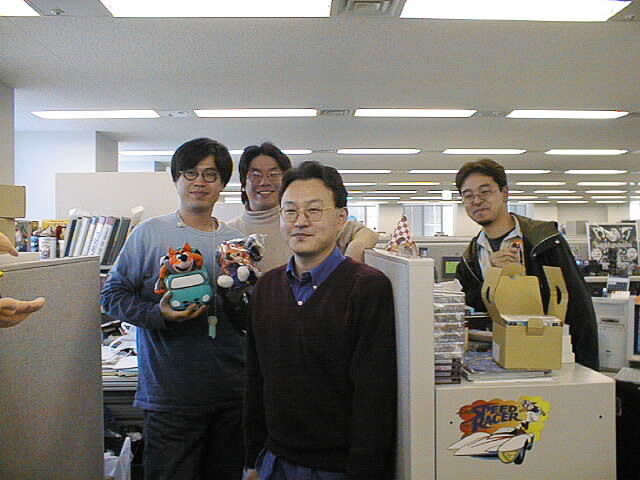
So it was with great enthusiasm and limited expectations that we approached the mutual Naughty Dog, Mark Cerny, and Sony decision that we were going to take the Japanese market really seriously with Crash. Sony assigned two brilliant and dedicated producers to us: Shuhei Yoshida and his then assistant Shimizu (aka Tsurumi-0600). They sat in on every major planning meeting and we scheduled the whole fall for me to localize the game in exacting detail (while we were simultaneously beginning work on Crash 2!).
For the most part, Yoshida-san made things happen and Shimizu, who has literally played like every video game ever made and read like every manga, worked the details. I (with a bunch of help from the artists) had to put in the changes.

Yoshida-san front and center, Shimizu on the far left, Rio (joined the team during Crash 2) on the far right
Somehow Yoshida-san was able to maneuver the game into being not one of those funny foreign games, but an official bona fide release of Sony Computer Entertainment, Inc. the first party Japanese studio. And it was to be sold and marketed pretty much like it had been made in Japan! Wow!
So to pull off this cultural masquerade Jason and I decided that Shu (as Yoshida-san was affectionately known) and Shimizu got pretty much whatever they wanted. They after all, knew the mysterious Japanese market. Which turned out to be pretty darn true. And, besides, both are really really smart and crazy hard workers (Shimizu is famous for sleeping under his desk) and so we all got along famously.
The gameplay itself wasn’t really too much of an issue. Shimizu did help us smooth out some sections and make them easier (often by adding extra continue points − opposite of Europe). But there were a lot of other changes.
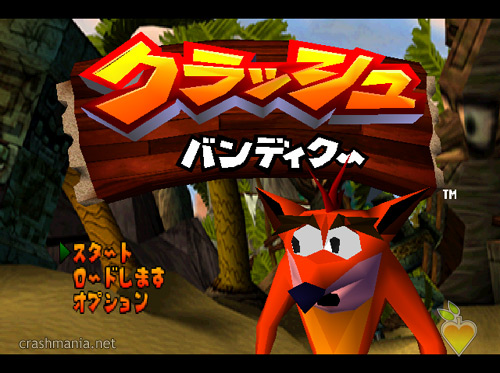
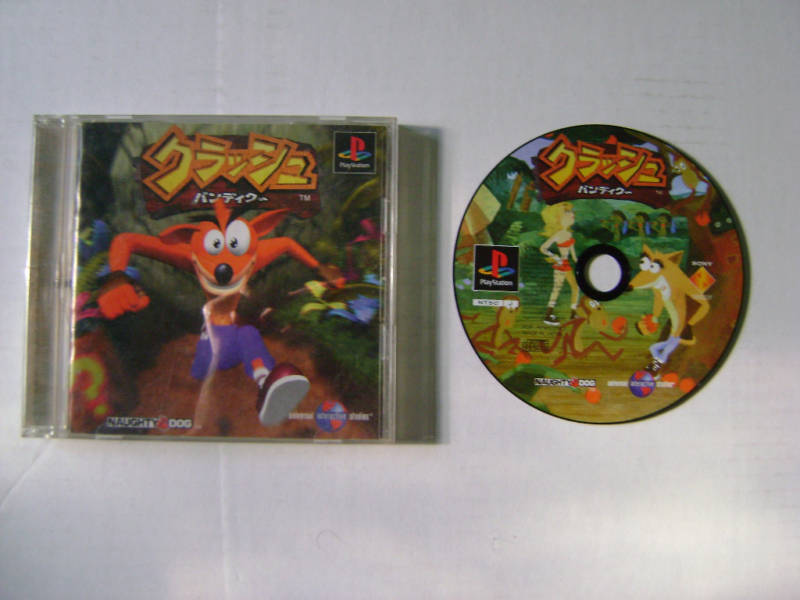
First of all, we had to translate the text. Some of this wasn’t so bad. But the main logo was a 3D object and Jason had to painstakingly create a version of the paper design the Japanese provided us — which required lots of checking from Shimizu as he doesn’t speak Japanese.
Above is the opening in Japanese.
And things got even harder (for me) with the in game text. The Playstation didn’t have a lot of video memory and we were using a medium resolution 512 pixel wide mode anyway. What little there was, we had pretty much consumed. But the Japanese language has four alphabets! One is Latin, two are similar but different looking phonetic alphabets, and the last is the giant Kanji pictographic database. Kanji would’ve been impossible, but we needed to cram the two extra phonetic sets in. Plus the characters are more intricate than the Latin alphabet and need more pixels. I can’t remember what I did to squeeze them in, but I do remember it was painful. One part I do recall was implementing the sets of letters that vary only by an extra dot or ” mark by drawing them with two sprites (hence saving video ram).
Once the font was installed we had to input the crazy looking “shift JIS” text. One of the problems in those days was that the text editors all 8-bit, unlike today were 16-bit typesets dominate. And with a European language you can usually tell if a line of text had gotten swapped or mangled, but in Japanese… and even worse, in shift JIS it just looks like a bunch of garbage characters.
So again, Shimizu had to check everything. A lot.
Our opening and closing cut scene dialog was recorded in Japanese using very high profile Japanese actors (so they told me). We replaced those audio files (using one of my automated systems of course!). There were also a good number of cases throughout the game where we had placed text in textures. The configuration screens, loading screens, load/save screens and all sorts of other ones. These all needed new versions. We collected all of these textures, shipped them out to Japan and got back Shimizu certified versions in exactly the same sizes with the Japanese text. I used and upgraded the system that I had built for the European version so that any file (texture, audio, etc) in the game could be “replaced” by a file of the same name in the same directory with a .J on the end (or a .S, .E, .F, .G, .I for various European permutations). The level packaging tool would automatically suck up the most appropriate version and shove it in the J versions of the levels. I’m not sure we left ANYTHING untranslated. Even Japanese games usually had more Engrish. Achem, English. I so remember a Castlevania with “Dlacura’s grave.”
Then the Japanese came up with this idea of having Aku Aku explain various gameplay mechanics to you when you break his boxes, much like the raspberry boxes in Super Mario World. This was a great idea, except it meant that the game was suddenly filled with about 200 extra paragraphs of text. Undecipherable text. I had to squeeze that into the levels too. More problematic was the seemingly simple fact that when a big block of text comes up on the screen the game effectively needs to pause so the player can read it. You can’t just “hit pause” but need a separate state. This simple feature caused a lot of bugs. A lot. But we stomped them out eventually.
Above you can see a walk through of the first level. A lot of the PITA localization work was in the save screens (big fun: character entry screen in three Japanese alphabets) and the various statistic screens at the end of the level. I think the Japanese allowed us to do away with the horrible password system and use memory card only.
The Japanese also had some famous actor record a whole collection of really zany sounding grunts and noises that Crash was to make. Shimizu lovingly crafted long lists of extremely specific places in the game where exactly such and such exclamation was to be uttered. He was never one to spare either of us from a great deal of work
But his willingness to tackle any task himself, no matter how tedious, made him hard to refuse. I also had to squeeze all these extra samples into the extremely tight sound memory, mostly by downgrading the bit-rate on other sounds. This caused Mike Gollom, our awesome sound design contractor to groan and moan. “3.5k is pure butchery” he’d complain. I found this SGI tool that used a really advanced new algorithm to downgrade the sounds, they sounded twice as good at any given bit-rate than the Sony tool.
Anyway the really funny bit about these Crash sounds was the subjective feel they left us Americans with. Strange! They made Crash sound like a constipated old man. But the Japanese insisted they were perfect. I guess they were right because the game sold like crazy over there.
Another weird audio difference was that five of the songs were swapped out for new ones. Josh Mancell the composer put it this way:
An 11th hour decision made by the Sony people in Japan. They felt that the boss rounds needed to sound more ‘video game-like’. The only reference they gave was music from the Main Street Electrical Parade at Disneyland. I only had a day or so to write all those themes. My favorite comment was about the original Tawna bonus round music. It roughly translated into ‘the sound of the guitar mixed with the tree imagery is too nostalgic-sounding’. I’m still scratching my head on that one.
You can find the different tracks here.
There were also a host of minor but strange modifications we needed to make. One was that a few characters originally had four fingers, which is typical of most American cartoon characters. Apparently the Japanese have a more than usual dislike of disfigured humanoids. Fingers were added (to make them the normal five). There were a whole bunch of little visual, audio, and gameplay changes Shimizu had us make to the game. Most of these I felt were neutral, different but not really better or worse, so I just trusted him and put them in. Occasionally if they were a really pain I pushed back.
Eventually, right around Thanksgiving, just in time for Jason and I to head to Japan to promote it, the Japanese version was ready!
If you didn’t catch it, I have a similar detailed post in the European localization of Crash.
| If you liked this post, follow me at:
My novels: The Darkening Dream and Untimed Latest hot post: WOW Endgame Analysis! |
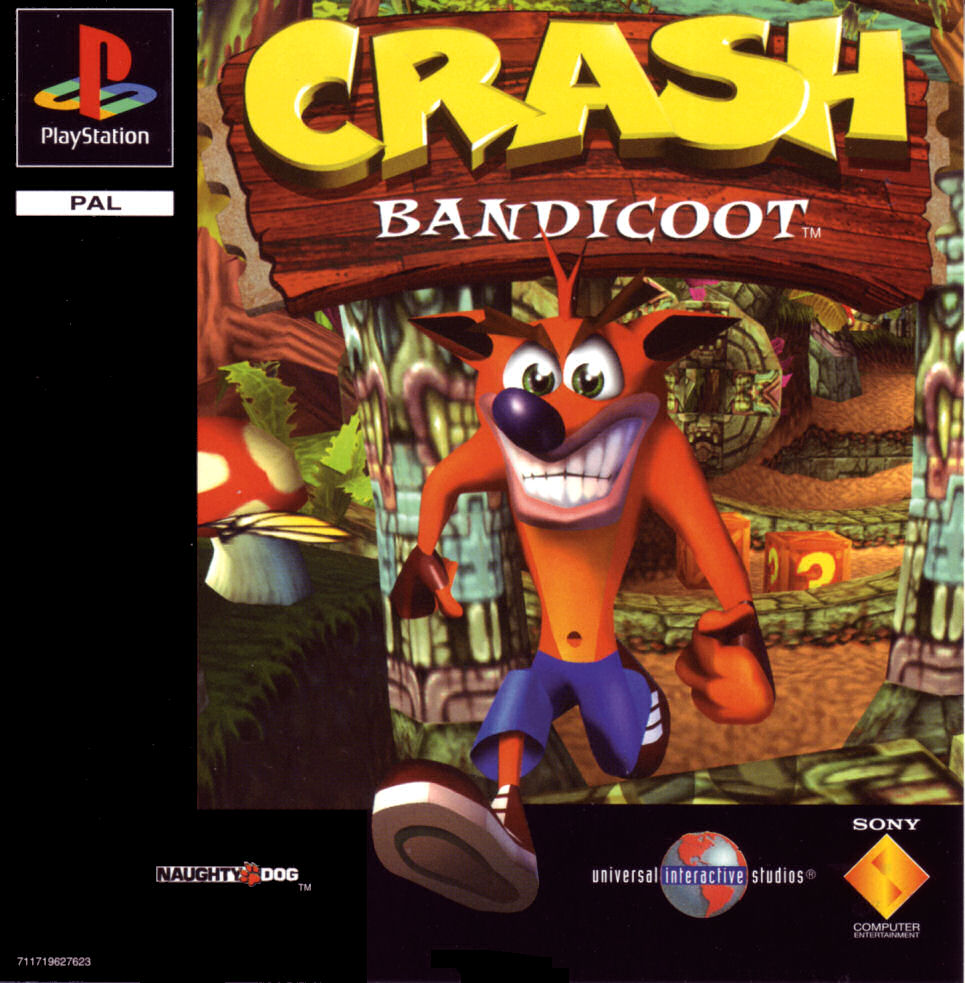
In the mid to late 90s, Playstation games had three SKUs: SCUS, SCEE, and SCEJ, being respectively the US NTSC version, the European PAL version, and the Japanese NTSC version.
The American version shipped in early September 1996. We finished it in early August (manufacture took a month). From my perspective — and it’s worth noting that during the Crash period I personally did most of the localization work — the European version was finished at the same time. I’d killed myself getting it ready during July. But Europe itself liked to drag matters out with a leisurely testing schedule. I wanted it done, because until it was, I couldn’t do much else.
At Naughty Dog, we pioneered the idea of simultaneous international release. By Crash 2 and Crash 3 the same exact code, conditionalized very slightly, ran all three versions. Jak & Daxter was one of the first games where the American version included the European languages. By Jak II you could switch languages on the fly in the menu anytime. We wanted one code base, one art base, one thing to debug. We wanted it for sale simultaneously world wide. I wanted one gold master.
This goal and the tools to do it began on Crash 1, and were fairly well in place by Crash 2. The international groups weren’t quite as on board and year after year dragged out the European and Japanese editions for extra testing. As best I can tell this resulted mostly from a “this is the way it’s always been done” kind of mentality. Jason and I have never been big on that type of reasoning. Still, that personal caveat aside, even from Crash 1, Sony’s international teams did an awesome job, putting in a tremendous effort to ensure the product was really polished for each territory.
Anyway, each territory had its own quirks. With the European version, they stemmed from PAL, the old European video standard. PAL actually has a slightly higher resolution and better color fidelity than NTSC (the US standard). But the kicker is that it runs at 50 hertz instead of 60. For Crash this meant that the frame rate would be 25 frames per second instead of 30.
The resolution itself wasn’t much of a problem. Crash was mostly a 3D game and it wasn’t hard to adjust the projection matrix in the engine to render the game to a different resolution. But the aspect ratio of PAL pixels is also a little different and Crash did have a certain amount of bitmap graphics like the powerups and font. The PAL frame buffers were larger and the machine had the same video RAM so increasing the resolution of the sprites was rarely an option. Generally, we just had to live with a slight aspect shift or stretch them to fit. I developed notation in the original data so that different kinds of sprites could go either way in a fairly uniform manner.
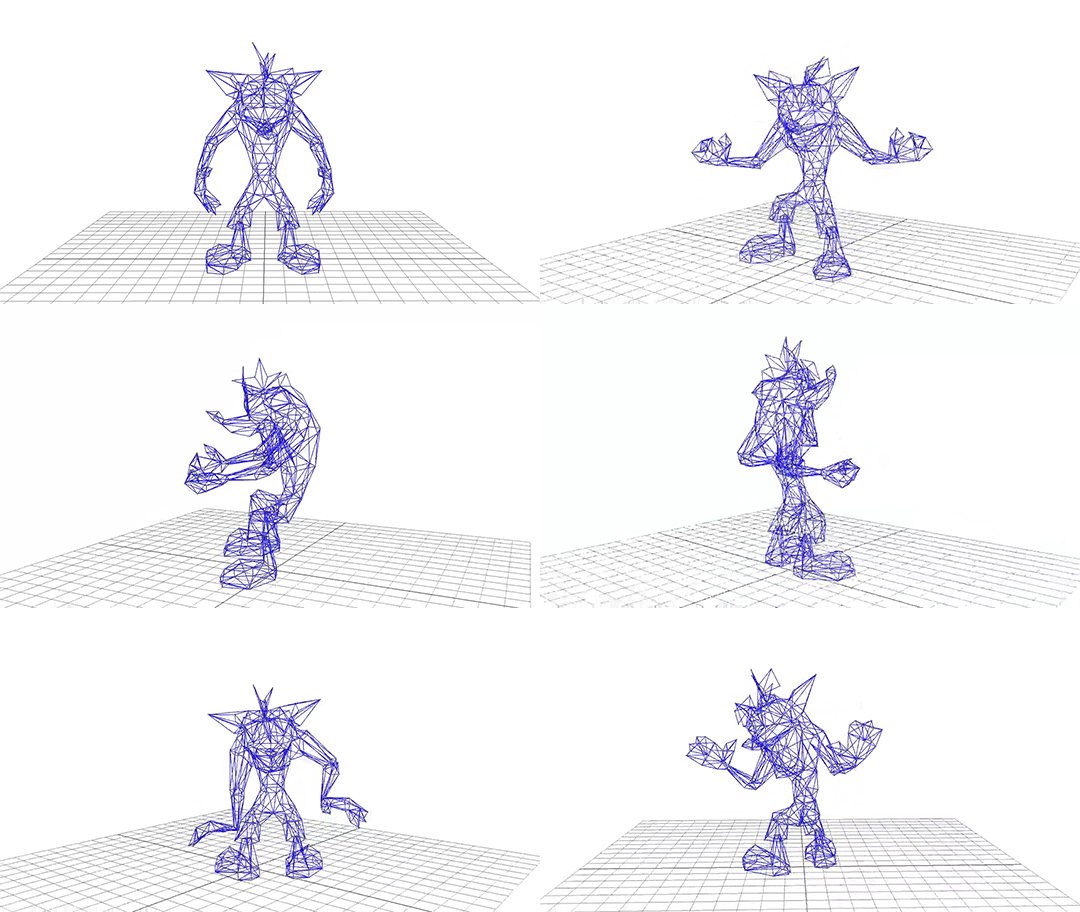
The real kicker was the frame rate. One of the reasons why the animation in Crash is so so much better than most of its contemporaries is that we stored every vertex for every frame — then compressed the living crap out of it. This meant that each segment of animation was sampled from Alias PowerAnimator at 30 fps. I modified the tools to support making a second copy of every animation where the step rate was adjusted to 25fps. The pal version used these files instead of the originals. This worked about 80% of the time. Sometimes it became necessary to notate a particular animation segment as having a strange or custom step for PAL, or even hand code certain frames. I added special constructs to my custom language (GOOL) which made this stuff as automatic as I could.
But the physics and collision systems also needed to adjust to the different frame rate. I had done PAL conversions for Rings of Power and Way of the Warriorand having every great programmer’s hatred for tedium had developed the notion when starting Crash that I would notate all “time and space based” units not in the traditional game programmer manner of “moves X pixels per frame” but in a kind of neutral space. Hence everything in Crash was measured in meters, seconds, and the like. I built into GOOL constructs like (meters 5) or (meters-per-second 2.5). The compiler or the runtime (depended) would convert these on the fly into the appropriate pixel per frame units.This had a number of big advantages. First of all, even without the PAL issue, it allowed the physics (and the enemies) to move in a fairly frame rate independent way. Special functions were used to deal with velocity and acceleration which took into account the current frame’s estimated real time (based usually on how long it took the previous frame to compute and render). This meant that the code which propelled Crash in a parabolic arc as he jumped would move him further per frame if the frame rate slipped to 20 or 15 (which, unfortunately, it sometimes did). This wasn’t a perfect solution, 15 fps still played worse than 30, but it helped.
And it really paid off with the PAL conversion. The hard work — and it was incredibly tedious — really only took me about five days. After running all the automatic convertors and debugging those I had to go through the entire game and check every single level, every creature, every behavior of every creature or object and make sure it stilled played and looked okay in PAL. If it didn’t I had to play with the numbers, or in the worst case add some special “if PAL do it a little differently” clauses to the GOOL code.
But this was in a world where most American games just played 16% more sluggishly in Europe and most European games 16% fast in America.
Crash played great in both — and looked great in both. The Euro version actually even looked a little better (higher resolution and better color) although the feel at 25hz was slightly inferior. But we didn’t invent the TV standard.
The final tricky bit with localization was the language(s). Crash 1 didn’t really have any voice (which was to become a huge deal in later games). But it did have some text.

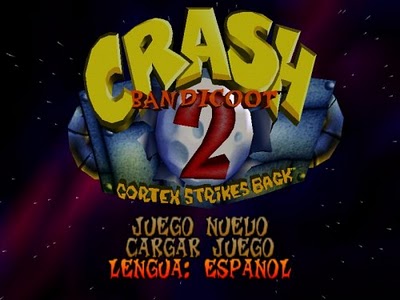
This is Crash 2, which is the only picture I could find, but Crash 1 was similar, just with the C1 title page
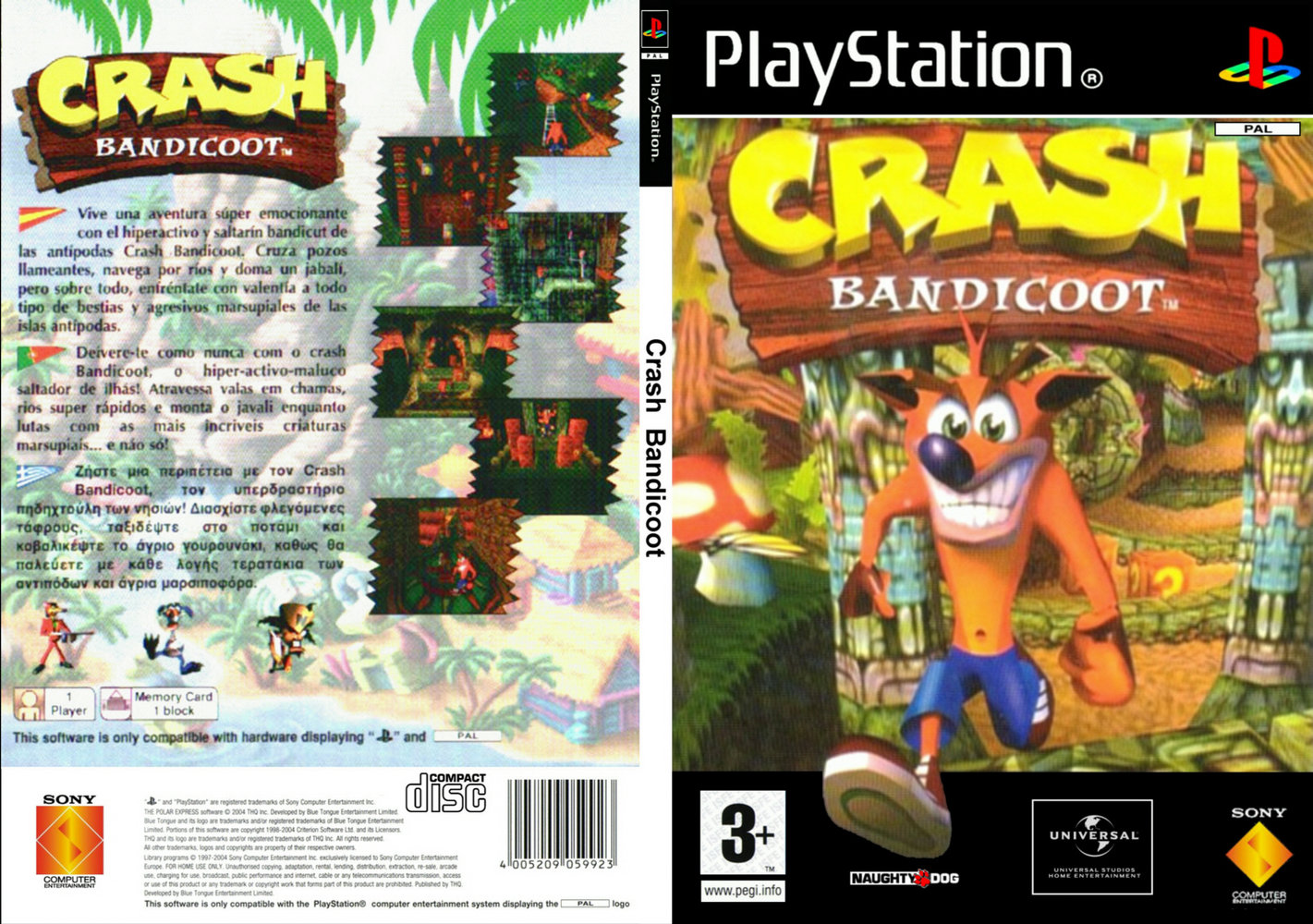
In typical programmer fashion, I invented another system for this. All of the text was generated by literal strings in the GOOL code, and since I controlled the compiler, I added a feature where a mapping file could be created for each language specifying the English text and the equivalent phrases in each of our five languages (English, French, Spanish, German, Italian). I changed the way strings were handled to index into a table and to have five files on disk for the string buffer. This is typical now, but was very unusual then. Even on Crash 1 you could change the language on the fly. But Europe made me put the toggle only at the main menu because they didn’t want to have to test for weird bugs that came up when you switched languages in the middle of a level.
I systemized all of this stuff by having the tools and the game itself both have separate notions of: video rate (NTSC, PAL), territory (which country’s disc it actually was), and language. This separated the concept of language from territory, opening up the possibility of foreign languages in the American versions (which didn’t happen until Jak 1 for logistical and legal reasons).
As requests came in from Europe to do peculiar and territory specific things like “make the game harder because European gamers like a challenge” (after Crash 1 we refused to acknowledge this “truism”) I modified the tools to allow territory specific overrides in the files that controlled the game data. For example, CONTINUE_POINT_64_32 in the jungle level, “hide in europe.” While I’m not sure the frustrated Euro gamer appreciated it, the system did make serving the producer’s requests easier.
In any case, the Euro version of Crash was lavished with the same attention to detail with which we did everything, and Sony Europe did the same. This was one (if not the) first product for which the whole international organization was behind and where they controlled the worldwide rights. Each Sony territory really pulled out all the stops in supporting and promoting the game as “made here.” It was highly localized, not just the game itself but each little country in Europe doing its own advertising and marketing campaign. Even the Irish filmed their own ads with Irish accented actors. Traditionally game players were highly “nationalistic” with, for example, French games selling better in France. The attention paid by both us and at all levels of the Sony infrastructure to selling a worldwide product aimed specifically at each and every consumer group really paid off.
The game sold like wildfire everywhere. Although we had certain champion territories like France and Australia (Crash’s virtual birthplace) who really poured on the love.
| If you liked this post, follow me at:
My novels: The Darkening Dream and Untimed Latest hot post: WOW Endgame Analysis! |
The first round of the crazy Naughty Dark Contest already has not one, but two special prize winners! And these lucky guys are both from Crash’s home country, Australia.

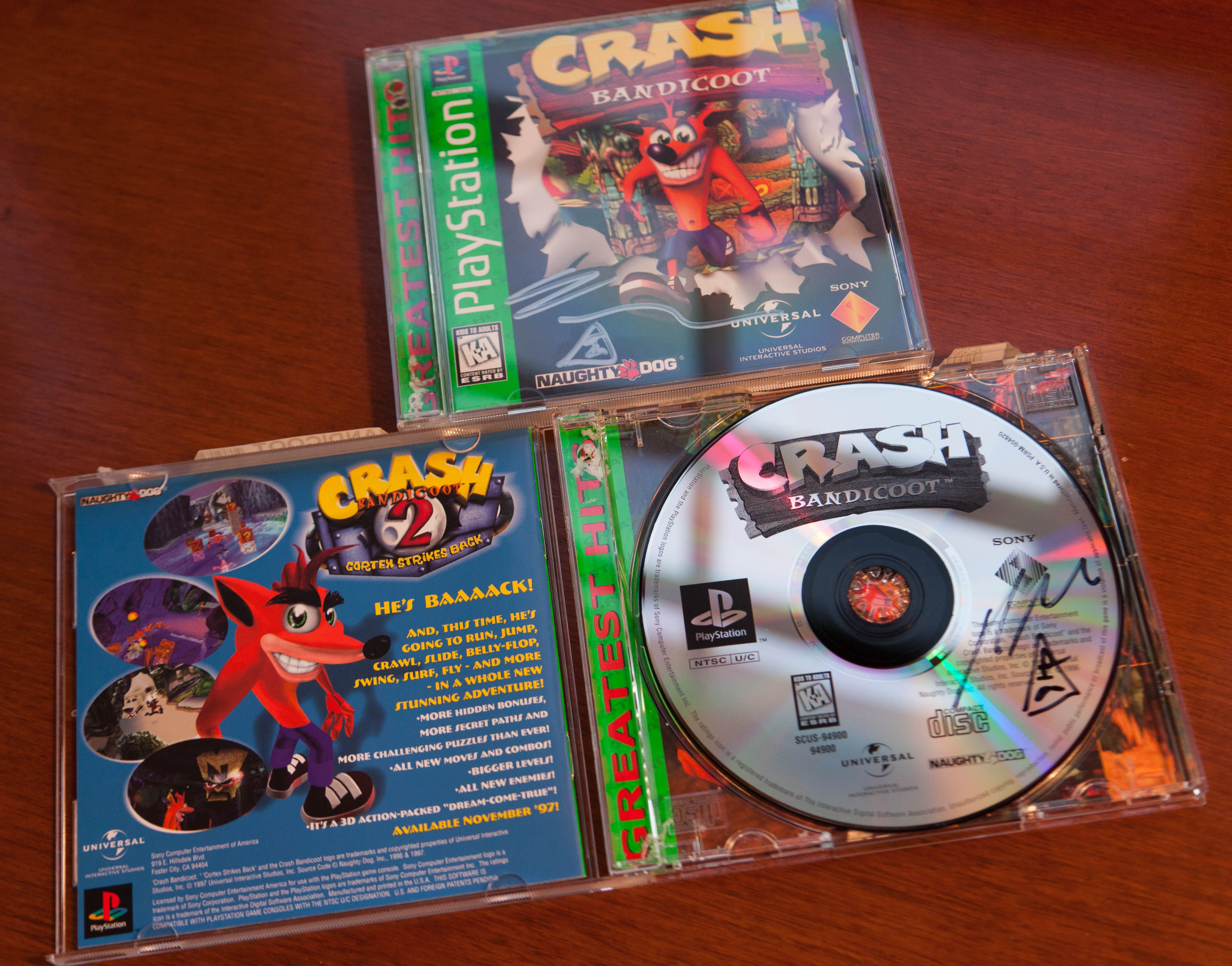
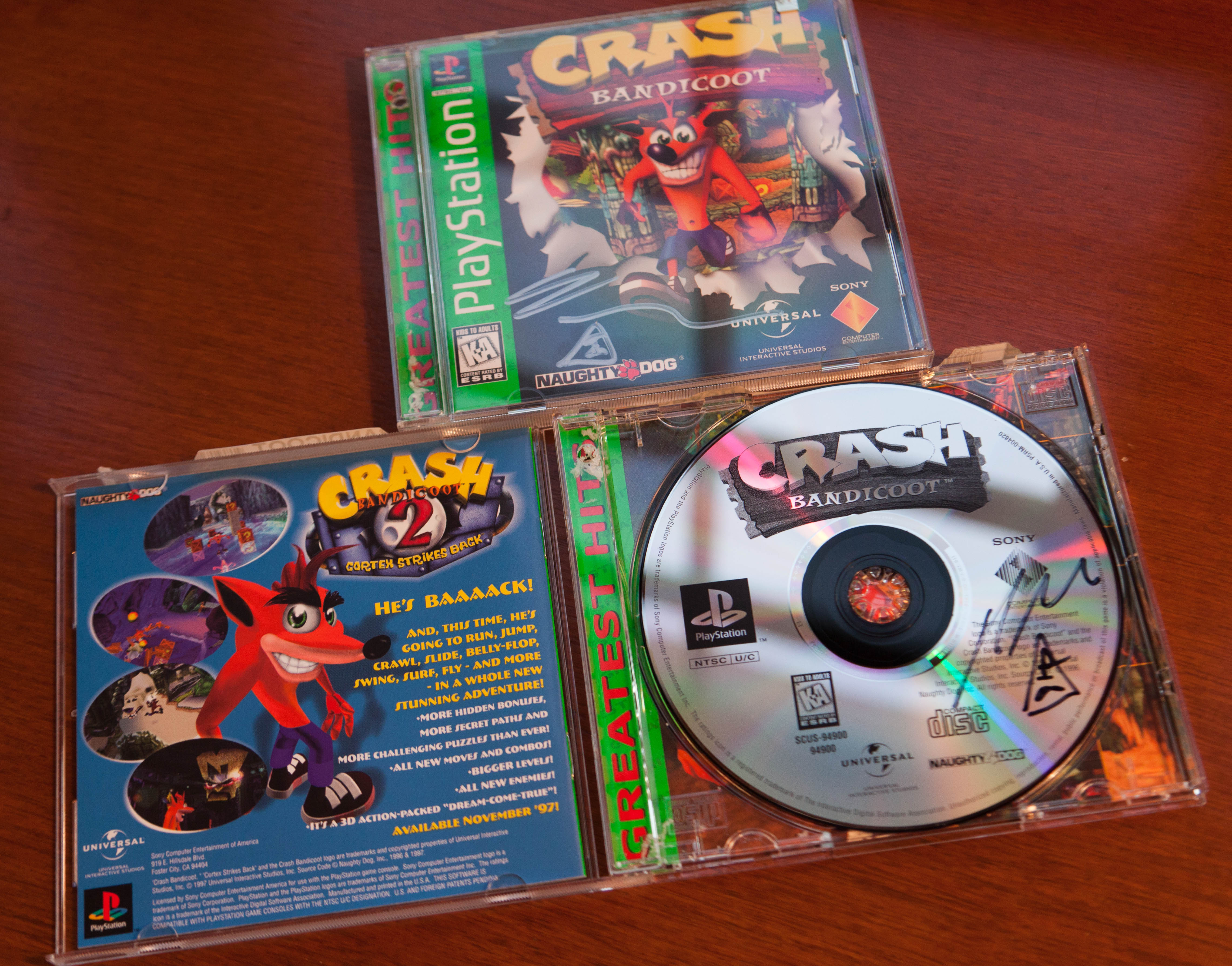
Both guys also wanted copies of the original Crash Bandicoot and here they are prior to shipping. I signed both cover and CD, including my special unforgable “symbol.” Yes, like Prince, I have a symbol. But you’ll have to ask the Painted Man what it means.
Thank you both immeasurably!
It’s also worth noting that this has made the virtual hat for the first round even more lucrative for the rest of you. Due to their prize winning each first round ticket is worth at least a 2% chance of winning a prize now — and if someone else claims a special prize, it could be even greater. So read up on the rules and participate.
This is the kickoff post for my new experimental — and hopefully permanent – giveaway program. Via this contest you, dear reader, will have the opportunity to win signed copies of Crash Bandicoot and Jak & Daxter games as well as my books and cool toys. All you have to do is participate in my gleefully elaborate scheme to help sell and promote my new novel, The Darkening Dream.
Or by clicking anytime on the big contest icon in the sidebar.
So if signed copies of any of the following look up your alley, read the rules and participate! And even if you aren’t a collector they apparently have significant dollar value because a set of four signed Crashs sold on Ebay recently for over $453!
2. It’s only $2.99 — but the price might go up soon.
3. You loved Crash Bandicoot.
4. You loved Jak & Daxter.
5. I was a great boss, friend, or co-worker.
6. My vampires don’t sparkle.
7. There are several beheadings.
8. Decrepit ancient Egyptian gods are cool.
9. The girl on the cover is really cute.
10. I handed you a glass of $100 wine at some point.
11. The book includes a “cesarian by vampire scene.”
And 4 refutations to your protests:
1. I’m poor – but it’s only $2.99.
2. I don’t have a Kindle – you can read Kindle books on a smartphone, iPad, or the web.
3. I’m too lazy to click twice – bad excuse.
4. I don’t read – do you really want to admit that?
Then after you do, retweet, share, like, or otherwise spam this post or a link to the book on all of your social media!
www.vg247.com has written a very nice piece on Naughty Dog’s 25th anniversary.
There’s been a few anniversaries in the gaming world this past year: Ubisoft’s 25th, Blizzard’s 20th. But it seems there may have been one that slipped under the radar, which is a big surprise considering this studio is now perhaps one of the most widely-recognised on the triple-A scene.
Naughty Dog is 25 years old this year.
But all things have an origin.
Jamming, man
In 1986, high school students Andy Gavin and Jason Rubin joined forces to found what was then known as Jam Software. The pair had been experimenting with computer programming, tooling around with C++, before combining their talents.
But it was in 1989 that the first seeds of the company as we know it today were sown. Making a new beginning, Jam Software was renamed Naughty Dog, with EA-published RPG Keel The Thief for Apple IIGS, Amiga and PC the first release under the new moniker. Its next effort, Rings of Power for the Genesis or Mega Drive, arrived in 1991 – another RPG published by EA.
And in 1994, Naughty Dog developed a 3DO fighting title for the now defunct Universal Interactive Studios (better known in recent years as Vivendi Games) called Way of the Warrior, with both single-play and multiplayer.
Based on Way of the Warrior’s success, Mark Cerny, then head of Universal Interactive Studios, agreed to back the company’s next games. What came afterwards signaled the beginning of Naughty Dog’s true success.
“Whoa!”
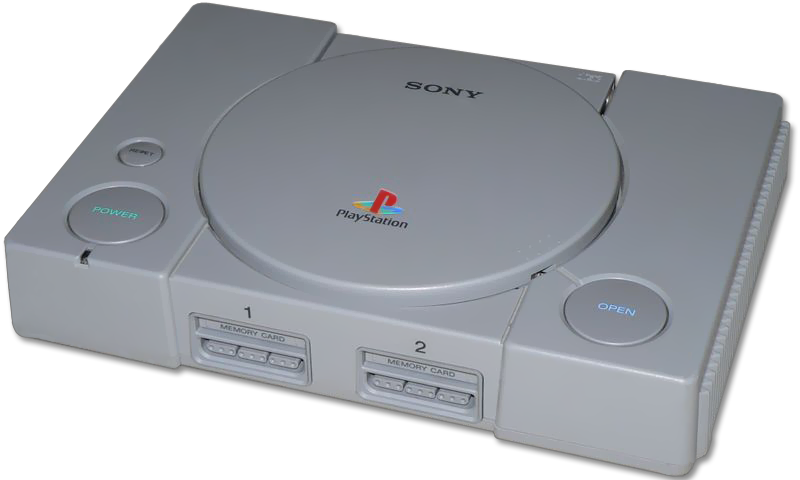
In 1996, with a distribution deal secured, Naughty Dog released a unique platformer called Crash Bandicoot. It was published by the fresh-faced Sony Computer Entertainment, which had released its debut console, the PlayStation, over 1994 and 1995.
Despite a few errors (our first game was actually published in 1985) this is a nice article with lots of good stuff and some fun videos from the different eras. Check out the full text here.
I added a gallery to the site and populated it with some of the standard images I had on hand for my games and books. At the moment this is mostly my draft book covers and tons of Crash Bandicoot photos (I collected them for my big series at the beginning of the year). Truth be told, the hardest thing was choosing a gallery plugin and getting the CSS configured properly. I spent about 90 minutes tracking down why my images we running off to the side in an infinite row. It turned out my theme has “white-space: nowrap;” turned on be default in the CSS. There are a lot of CSS parameters.
PlayStation Museum has organized a charity auction of all four Naughty Dog Crash Bandicoot games, signed by yours truly and Jason Rubin. The auction link can be found here. All proceeds go to the American Cancer Society. Go bid!
In honor of the recent 15th Anniversary of my baby Crash Bandicoot, I present collected together the original suite of American TV Ads which premiered in September of 1996. It’s the suit that helped make the Bandicoot what he was.
Thanks to Playstation Museum for collecting and uploading these. You’re hurting my elbow!
| If you liked this post, follow me at:
My novels: The Darkening Dream and Untimed Latest hot post: WOW Endgame Analysis! |
In honor of Crash’s 15th Anniversary I wanted to make a post whose primary purpose is to serve as a repository for comments from you — the fans — about your first and favorite Crash Bandicoot impressions. Please make them in the comments. This is the place to tell that story of how you got your Playstation and Crash Bandicoot for Christmas when you were five, etc. etc. So to that effect, I’ll start it off with a brief tale that begins the night Crash Bandicoot launched.
In September 1996 all of Naughty Dog flew to New York for the combined Crash Bandicoot / Playstation 1 year anniversary party. It was on a big rooftop deck in the meat packing (hehe Beavis, you said meat packing) district. All of us got pretty drunk. There was a loud band. Very loud. Simultaneously, Ken Kutaragi (father of the Playstation!) decided to engage me in a highly technical discussion — against the 120 decibel background — using his rather broken English and my exactly zero command of Japanese. But in any case I didn’t sleep — we saw dawn in some New York greasy spoon.
About four hours later, Jason and I were on a plane to London. I didn’t sleep — why waste good reading time.
We arrived in London for ECTS and various Crash launch promotional meetings. We were immediately conducted to small hot smoky cubicles and interviewed by a variety of game journalists in numerous European languages for about eight hours — also against about 100 decibels of trade show. We then went to the bar (scotch). Then to dinner (wine). Then to a night club (more booze). Then a cigar bar (more scotch). Then to our hotel room (with about 15 or so European marketing and sales folk). There we consumed every single item in our minibar. We called down to the desk (4 in the morning) and had them bring us a NEW minibar. Yes, a complete refill of all items at 4 in the morning. We consumed that. Except for two miscellaneous tiny liquor bottles I can’t remember. The cost of just one minibar was 800 pounds sterling. We ate/drank two.
We didn’t sleep.
But we did spend another eight hours giving interviews. Then we went out again. That night I think we got 2-3 hours of sleep. But interviews again starting at 8am.
Somewhere in there I visited Westminster Abbey.
By day three we discovered that a number of our new friends (English) had never left the Island of Great Britain. So we all boarded the Chunnel and went to Paris (from Waterloo to Napoleon stations specifically, which is amusing). In Paris we started drinking at 10am. We kept drinking (many bars). We ate dinner (more wine). We went to someone’s apartment (more drinks). There was no sleep involved. After staying out all night (drinking) after the day of (drinking) we boarded the Chunnel back to London. I might have dozed. We went straight from there to the airport and got on a flight back to LAX.
Ah, first class. There were scones with clotted cream. And perhaps an hour or three of sleep. But we landed in LA at 7am. I was on the beach jogging by 8:30am. In the office at 10am. Back to work on the Japanese version of Crash. I went home early that day. Midnight.
Making video games builds stamina.
Don’t forget to put your own Crash memories in the comments section!
| If you liked this post, follow me at:
My novels: The Darkening Dream and Untimed Latest hot post: WOW Endgame Analysis! |