Image
  • Writing
    • Andy Gavin: Author
    • About my Novels & Writing
    • All Writing Posts
    • The Darkening Dream
      • Buy the Book Online
      • Sample Chapters
      • Reviews
      • Info for Reviewers
      • Press Coverage
      • Awards
      • Cast of Characters
    • Untimed
      • Buy Untimed Online
      • Book Trailer
      • Sample Chapters
      • Reviews
      • Info for Reviewers
      • Press Coverage
      • Awards
      • Cast of Characters
    • Scrivener – Writer’s Word Processor
    • iPad for Writers
    • Naughty Dark Contest
  • Books
    • Book Review Index
    • Favorite Fantasy Novels
    • Andy Gavin: Author
    • The Darkening Dream
      • Buy the Book Online
      • Sample Chapters
      • Short Story: Harvard Divinity
      • Reviews
      • Info for Reviewers
      • Press Coverage
      • Awards
      • Cast of Characters
    • Untimed
      • About the Book
      • Buy Untimed Online
      • Book Trailer
      • Sample Chapters
      • Reviews
      • Info for Reviewers
      • Press Coverage
      • Awards
      • Cast of Characters
    • Naughty Dark Contest
  • Games
    • My Video Game Career
    • Post Archive by Series
    • All Games Posts Inline
    • Making Crash Bandicoot
    • Crash 15th Anniversary Memories
    • World of Warcraft Endgames
    • Getting a Job Designing Video Games
    • Getting a Job Programming Video Games
    • Naughty Dark Contest
  • Movies
    • Movie Review Index
  • Television
    • TV Review Index
    • Buffy the Vampire Slayer
    • A Game of Thrones
  • Food
    • Food Review Index
    • Foodie Club
    • Hedonists
    • LA Sushi Index
    • Chinese Food Index
    • LA Peking Duck Guide
    • Eating Italy
    • Eating France
    • Eating Spain
    • Eating Türkiye
    • Eating Dutch
    • Eating Croatia
    • Eating Vietnam
    • Eating Australia
    • Eating Israel
    • Ultimate Pizza
    • ThanksGavin
    • Margarita Mix
    • Foodie Photography
    • Burgundy Vintage Chart
  • Other
    • All Posts, Magazine Style
    • Archive of all Posts
    • Fiction
    • Technology
    • History
    • Anything Else
  • Gallery
  • Bio
  • About
    • About me
    • About my Writing
    • About my Video Games
    • Ask Me Anything
  • Contact

Archive for Hermione Granger

Video Games, Novels, and Ideas

Aug01

Since I’ve created thirteen video games and written two novels I’m often asked how the process compares between the two. This is a complex topic, but here goes one stab at it, focusing on the generation of the idea.

The idea part 1: The What

Both games and novels start with a basic idea, and it’s essential to focus on what’s important. In both cases, this is a creative process, imagining something blurry and only partially formed that calls out to you.

Games are about gameplay, so this is then a question of gameplay genre. Not the Horror vs Mystery type of genre, but what kind of game is it. Generally you start with one of the proven gameplay types: Platformer, shooter, driving game, sports game, etc and then try to bring something new to the table. For Crash Bandicoot, this was “character platform game in the vein of Donkey Kong Country, but in full 3D” (there were no 3D platform games when we started).
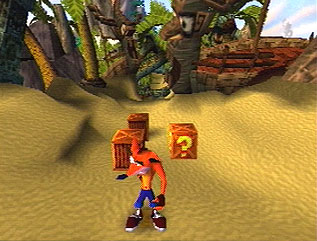
This was not easy in 1995!

With novels, the core idea is also genre, but the meaning of this is different. In starting The Darkening Dream, I had this image come into my head – and some might consider me disturbed – of a dead tree silhouetted against an orange sky, a naked body bound to it, disemboweled, and bleeding out. The sound of a colossal horn or gong blares. The blood glistens black in the sunset light. Bats circle the sky and wolves bay in the distance. But sacrifice isn’t just about killing. It’s a contract. Someone is bargaining with the gods. Complex ideas are the intersection of multiple smaller ideas. To this I brought a desire to reinvent the classic Buffyesque story of “a group of teens fight for their lives against a bunch of supernatural baddies trying to destroy the world.” But the twist is that I wanted to ground all of the magic and supernatural in “real” researched historical occult. This defined the book as a kind of supernatural thriller from the get go.

The idea part 2: The Who and Where

Part 1 gives you a core, or germ, of the project, but to start moving with it you need setting.

Again, looking at The Darkening Dream I had this disturbing image in mind. This was a vampire moment, but not exactly your typical one. For years, I’d been noodling on my own private vampire mythos, grounded in a kind of religio-historical thinking. Coppola’s Dracula, for example, has Vlad’s dark power grounded in rage and the Christian god forsworn. But I liked the idea that the most ancient of vampires was far older than Christ, perhaps older than civilization itself. This got me thinking about Neolithic religion. Pre-civilized peoples were essentially shamanistic. The shaman (sometimes called a Witch Doctor) interfaces between the people and hidden powers, both wondrous and terrible. What if one of these men, millennia ago, struck a dark bargain: blood for life. And so was born the idea of the vampire blood gods, dark deities of old forests, of sacrifices bleeding on trees, of gnashy gnashy teeth, slick with blood. This held the key to a ancient vampire explanation grounded in belief. Gods created and fed on faith, instead of the other way around. And the blood gods are not alone. Other ancient gods might still linger, diminished, but still powerful. There seemed a natural synergy between their fate and the syncretistic quality of human religion. As the belief changes, so does the object of said belief. 
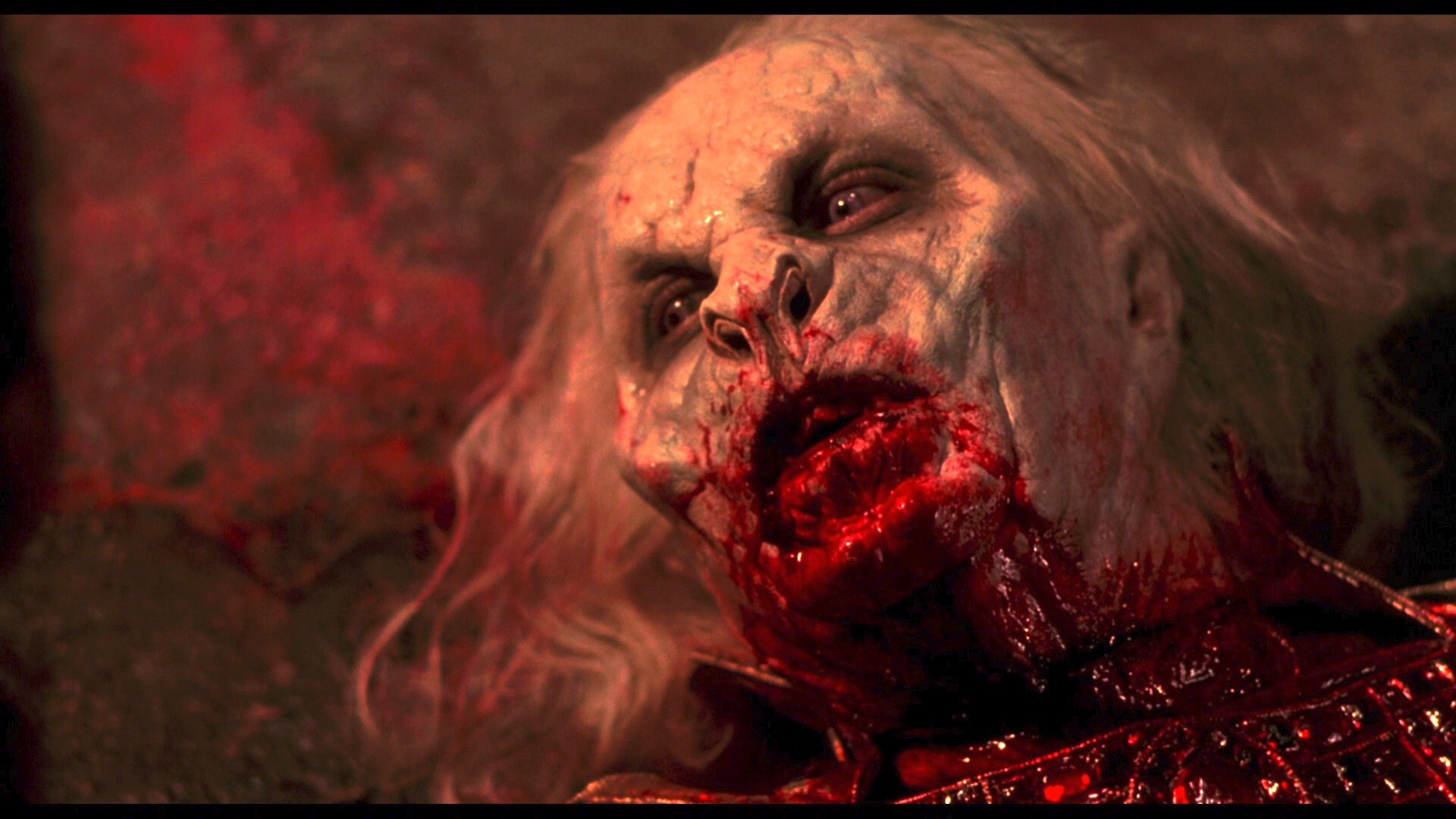
This meta-idea is very complex, a kind of world setting rooted in history, but reaching back to basics, novels are fundamentally about protagonist and the drama generated by the obstruction of their desire by opposing forces (often antagonist). I tend to think of the antagonists first, but this is a little backward. I knew I wanted a teenage girl, mostly for reasons of contrast with these sinister villains. She too, should be a dabbler in some school of occult-religious power. I like the idea of magic involving hard work and study, call it bookworm power, so I conceived of this studious girl, kind of an older Hermione Granger, daughter of a scholar father with a hidden past. As a heroine, she seeks to use her growing skills to “do the right thing” but all such power if fraught with danger, and her naivety gets her in way over her head.

This magical-religious thinking lead me to a conflict between the old (superstitious?) way of thinking and the modern (technological?) world. I was drawn to a number of cusp points, but settled on the eve of World War I. That war changed the human political landscape, completing the process of casting down King and Church that had been ongoing since the Reformation. It also provided an era with significant room for sequels (WWI, WWII, cold war, etc.) and a freedom from cheap plotting shortcuts like mobile phones and the internet.
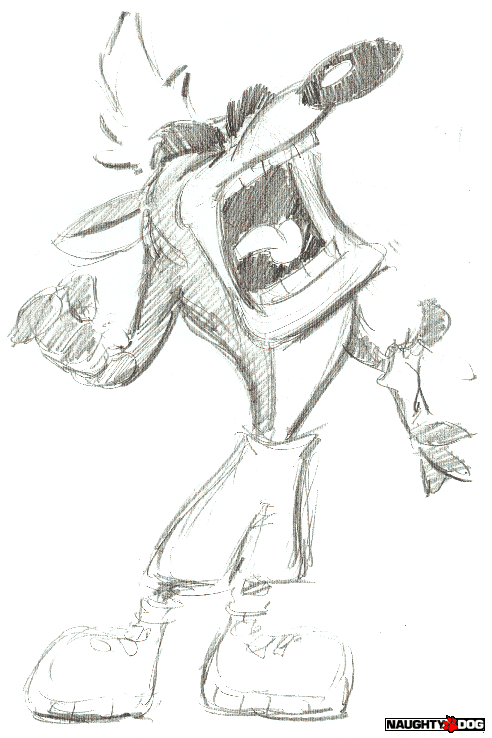
The first real Crash

With Crash Bandicoot, the notion of setting was much simpler, but no less important. Back in 1994 when we were visualizing our 3D platform game we wanted to follow in the tradition of using a quasi-animal character. Various factors led us to a sort of Looney Tunes style character design and world. In the early 90s, voice for video game characters was technologically dicey and tended to be cheesy, so we thought to convey strong personality through animation.  We also liked the idea of taking a real animal that had a distinct name, yet one rare enough that few people knew what it looked like. In this way, we hoped to “hijack” the animals name and have our character become representative of this real animal. This quest for a cute, well named, and rare animal led us to the Bandicoot, and hence to an isolated island setting full of exotic animals. In the cartoon space it seemed natural for the villain to be an evil genius, misunderstood, surrounded by idiot minions that bungle his brilliant plans :-). Doctor Neo Cortex was born. Since normal rodents are a bit mousy, and not necessarily that cool, we gave him the Evolve-O-Ray program in which he was “enhancing” the animal life of his island. Crash took form as the goofy “bungled” product of these experiments, fighting, in his goofy way, to protect the natural world from this renegade scientific program.

Snowball on the hill

Once you work out the basic creative concept for a big project, the rest of the ideas tend to flow outward from these first principles.

In world of The Darkening Dream I drew on historical and religious settings, people, magics, and sects to provide allies and enemies, creating their motivations out of their own peculiar frameworks. With Crash, the cartoon style of the world and the practical needs of the platform game drove decisions. Platform games (and many other game types) have Bosses and Sub-bosses. If Neo Cortex is the boss, then he needed henchmen (mutated animals and lab assistants) and middle management (the various Sub-boss animals). His island needed varied settings (read variety), but it was a jungle island, so this led us to island-compatible settings like beach, jungle, caves, etc.

In previous posts I discussed the differing importance of story to novels and video games, the origins of the magic in The Darkening Dream, and the history of Crash Bandicoot. Sometime in the future, I’ll probably continue this series by talking about production itself.

Related posts:

  1. How do I get a job designing video games?
  2. Games, Novels, and Story
  3. Making Crash Bandicoot – part 2
  4. Crash Bandicoot – Interviews “R” us
  5. So you want to be a video game programmer? – part 2 – Specs
By: agavin
Comments (15)
Posted in: Darkening Dream, Games
Tagged as: Andy Gavin, Bandicoot, Crash Bandicoot, Doctor Neo Cortex, Donkey Kong Country, Fiction, Games, Hermione Granger, Ideas, Neo Cortex, Platform game, The Darkening Dream

Book and Movie Review: Harry Potter and the Deathly Hallows

Nov21

Title: Harry Potter and the Deathly Hallows

Author: J.K. Rowling

Genre: YA Fantasy

Read: 21 July 2007, Watched (part 1): 20 Nov, 2010

Summary: Satisfying but obligatory conclusion to the epic series.


Retarded title aside, this is a pretty good film. Caveats, however, abound. If you haven’t seen all the previous installments, or at least the last several — forget it. The film just roles right into the action, with nary an attempt to explain past events, or even to introduce the rather vast array of characters, some of whom die after only a few moments of screen time. This reliance on the previous chunks of the story I find perfectly reasonable, to do anything else would be difficult and boring.

What is odd, however, is that I’m not sure this film series would make a whole lot of sense to the fifty people on earth who haven’t read the books. In fact, I’m pretty sure it wouldn’t. I know a few of those people, and they seem to be universally baffled by the films, and don’t particularly enjoy them. Now I enjoyed my 2.8 hours, but I’ve read all the books, and seen each film at least once (as they came out in almost all cases). The books and films enjoy an peculiar symbiotic relationship. The films rely on the books completely for the sense of the rhythm of Hogwarts (not present in DH part 1 anyway), true understanding of the complexity of the plot, anything beyond names and faces for the secondary characters, etc. They just don’t have time to include it. The movies, on the other hand, prop up the visual world of the series. Now I first read the first four books BEFORE any of the films came out, but when I went back to reread book one this year (it’s still great) I realized how little description is actually in the novel, and how I now visualized exactly the lush and detailed visual world of the films. Most of the viewers in the theatre weren’t even old enough for it to have been possible for them to have read before being exposed to the film imagery. It also seems a bit odd that the films aren’t really made to stand on their own. To the non reader they offer up characters that they never explain. I guess the gravitational pull of the source material is too strong.

Back to DH part 1. Like the book it has an entirely different feel than the rest of the series. Particularly, given how the writers have split it. There’s no Hogwarts at all. No teachers (except a brief glimpse of Snape). Almost none of the other students (Draco and Luna only). It’s a movie about Harry, Ron, and Hermione. That isn’t bad, but it’s different. It’s also a film about Voldemort, because we see a lot more of him — or at least of the CG that completely hides Fiennes. The decision to split the film — beside making the studios et all an extra billion dollars — has given them five hours to work with instead of three. This means that this film is the most faithful to the book since number 3 (my favorite). It feels less rushed, darker and more deliberate. But even having read and seen everything, I had the feeling several times that I just had to take the logical leaps for granted. There still isn’t enough time to really explain the byzantine backstory.

Ron continues to be the weakest of the three core actors, with Harry being fine, and Emma Watson shining as Hermione. I want to see what she can do in a totally different role. Helena Bonham Carter is too over the top. The opening scene with the council of baddies was kinda cheesy, and the death of Dobby felt forced and lacked proper emotional weight. Draco just stands around and looks like he doesn’t know his lines. Hardly anyone else matters. As I said, it’s basically the gang of three in the tent vs the world.

But hell, on top it felt pretty satisfying, and now we have to wait for the last one.

Related posts:

  1. Book and Movie Review: Let Me In
  2. Book and Movie Review: The Road
  3. Book and Movie Review: Twilight
  4. Book Review: Forever
  5. Movie Review: Centurion
By: agavin
Comments (4)
Posted in: Books, Movies
Tagged as: books, Daniel Radcliffe, Emma Watson, Fiction, Film, Harry Potter and the Deathly Hallows, HarryPotter, Helena Bonham Carter, Hermione Granger, Hogwarts, J.K. Rowling, JK Rowling, Literature, Lord Voldemort, reviews, Ron Weasley
All Things Andy Gavin
Copyright © 2026 All Rights Reserved
Programmed by Andy Gavin