
Layout Image
  • Home
  • Books
    • About My Writing
    • The Darkening Dream
      • About the Book
      • Buy the Book Online
      • Sample Chapters
      • Short Story: Harvard Divinity
      • Cast of Characters
      • About the Magic
      • Goodreads Giveaway
    • Untimed
      • About the Book
      • Buy Untimed Online
      • Book Trailer
      • Sample Chapters
      • Cast of Characters
      • Origin of the Idea & Characters
      • What the critics say
      • Press Coverage
      • Goodreads Giveaway
    • Naughty Dark Contest
    • Favorite Fantasy Novels
  • News
  • Reviews
    • The Darkening Dream
      • What the critics say
      • Info for Reviewers
      • Press Coverage
      • Awards
    • Untimed
      • What the critics say
      • Info for Reviewers
      • Press Coverage
      • Awards
  • Bio
  • Gallery
  • Blog
    • All Posts
    • On Writing
    • Reviews
    • Video Games
    • Food
    • Technology
    • Anything Else
  • About
    • About me
    • About my Writing
    • About my Video Games
    • Ask Me Anything
  • Contact

Buy it Now!

Watch the Trailer

Or Enter to Win a Free Autographed Copy
Sample Learn More

Buy it Now!

Or Enter to Win a Free Autographed Copy

Sample Learn More

Round 4: 24 of 100 tickets!

Subscribe by Facebook:

Follow @asgavin

Find Andy at:

Follow Me on Pinterest

The Darkening Dream

  • About the book
  • Where to buy
  • Sample Chapters
  • Short Story: Harvard Divinity
  • Characters
  • About the Magic
  • Reviews
  • Reviewer Information
  • Press Coverage
  • Awards
  • Naughty Dark Contest
  • Goodreads Giveaway

Untimed

  • About the book
  • Buy Untimed Online
  • Book Trailer
  • Sample Chapters
  • Dramatis Personae
  • Origin of Untimed
  • What the critics say
  • Press Coverage
  • Awards
  • Reviewer Information
  • Goodreads Giveaway

Recent Posts

  • Jabbering about Untimed
  • Untimed for Cheap!
  • Untimed Book Trailer
  • Untimed and Forbidden Giveaway!
  • Dream Sale
  • Untimed starred in Publishers Weekly!
  • Adventures in the Screen Trade
  • Untimed - $1.99 this week!
  • Unbendable Untimed
  • Untimed for sale at B&N and iTunes
  • Whelping Characters
  • Untimed officially for Sale!
  • Untimed nearly here!
  • Thanksgiving Dream - only $0.99
  • Untimed Goodies
  • Coffin Hop for Halloween
  • Harvard Divinity
  • Untimed Characters
  • Untimed Cover Reveal!
  • Untimed - Logo Faceoff

Video Games, Novels, and Ideas

Aug01

Since I’ve created thirteen video games and written two novels I’m often asked how the process compares between the two. This is a complex topic, but here goes one stab at it, focusing on the generation of the idea.

The idea part 1: The What

Both games and novels start with a basic idea, and it’s essential to focus on what’s important. In both cases, this is a creative process, imagining something blurry and only partially formed that calls out to you.

Games are about gameplay, so this is then a question of gameplay genre. Not the Horror vs Mystery type of genre, but what kind of game is it. Generally you start with one of the proven gameplay types: Platformer, shooter, driving game, sports game, etc and then try to bring something new to the table. For Crash Bandicoot, this was “character platform game in the vein of Donkey Kong Country, but in full 3D” (there were no 3D platform games when we started).
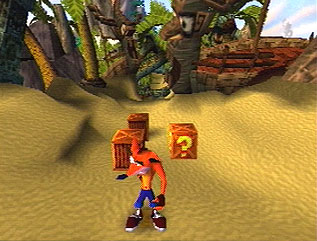
This was not easy in 1995!

With novels, the core idea is also genre, but the meaning of this is different. In starting The Darkening Dream, I had this image come into my head – and some might consider me disturbed – of a dead tree silhouetted against an orange sky, a naked body bound to it, disemboweled, and bleeding out. The sound of a colossal horn or gong blares. The blood glistens black in the sunset light. Bats circle the sky and wolves bay in the distance. But sacrifice isn’t just about killing. It’s a contract. Someone is bargaining with the gods. Complex ideas are the intersection of multiple smaller ideas. To this I brought a desire to reinvent the classic Buffyesque story of “a group of teens fight for their lives against a bunch of supernatural baddies trying to destroy the world.” But the twist is that I wanted to ground all of the magic and supernatural in “real” researched historical occult. This defined the book as a kind of supernatural thriller from the get go.

The idea part 2: The Who and Where

Part 1 gives you a core, or germ, of the project, but to start moving with it you need setting.

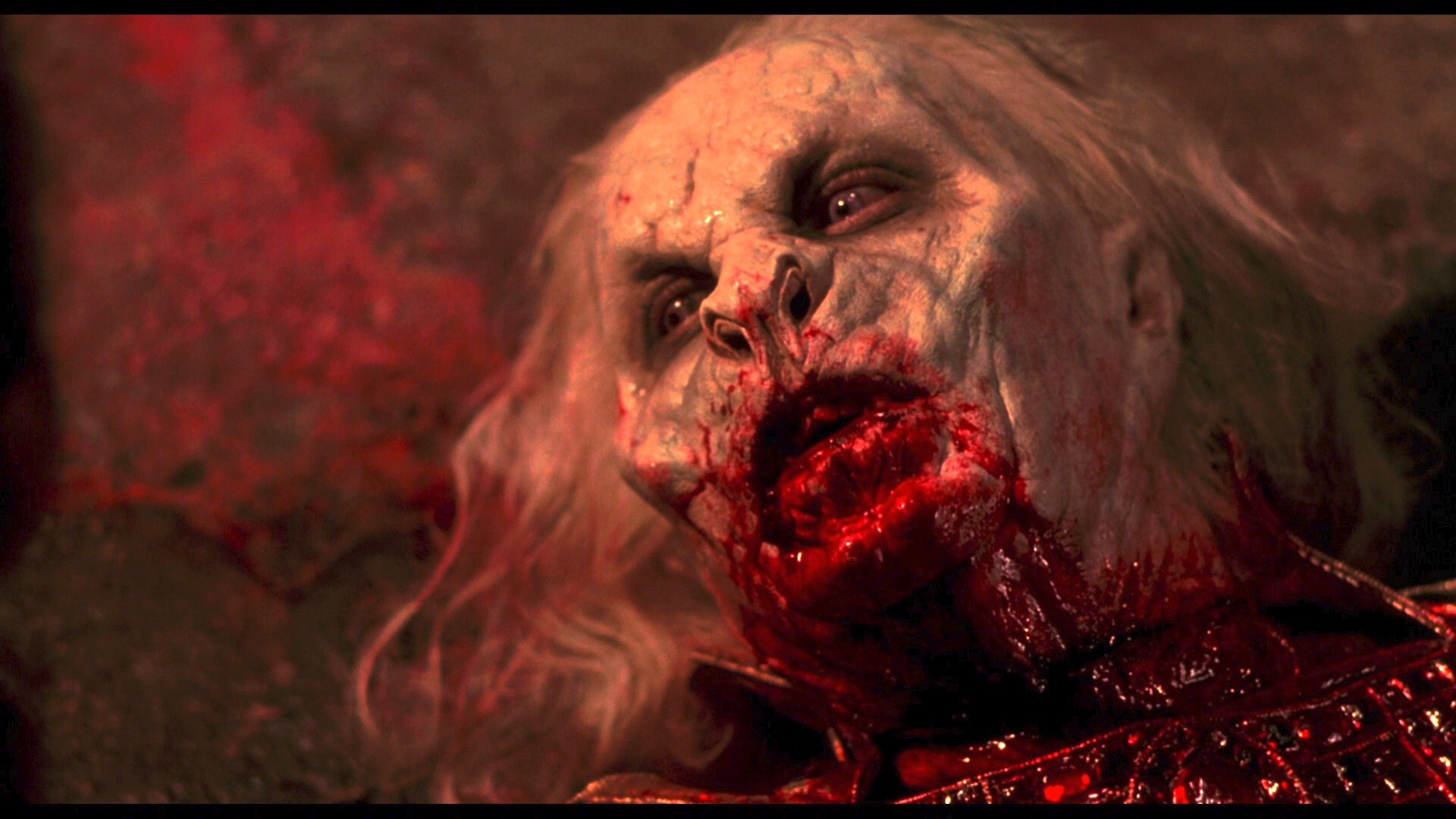
Again, looking at The Darkening Dream I had this disturbing image in mind. This was a vampire moment, but not exactly your typical one. For years, I’d been noodling on my own private vampire mythos, grounded in a kind of religio-historical thinking. Coppola’s Dracula, for example, has Vlad’s dark power grounded in rage and the Christian god forsworn. But I liked the idea that the most ancient of vampires was far older than Christ, perhaps older than civilization itself. This got me thinking about Neolithic religion. Pre-civilized peoples were essentially shamanistic. The shaman (sometimes called a Witch Doctor) interfaces between the people and hidden powers, both wondrous and terrible. What if one of these men, millennia ago, struck a dark bargain: blood for life. And so was born the idea of the vampire blood gods, dark deities of old forests, of sacrifices bleeding on trees, of gnashy gnashy teeth, slick with blood. This held the key to a ancient vampire explanation grounded in belief. Gods created and fed on faith, instead of the other way around. And the blood gods are not alone. Other ancient gods might still linger, diminished, but still powerful. There seemed a natural synergy between their fate and the syncretistic quality of human religion. As the belief changes, so does the object of said belief. 
This meta-idea is very complex, a kind of world setting rooted in history, but reaching back to basics, novels are fundamentally about protagonist and the drama generated by the obstruction of their desire by opposing forces (often antagonist). I tend to think of the antagonists first, but this is a little backward. I knew I wanted a teenage girl, mostly for reasons of contrast with these sinister villains. She too, should be a dabbler in some school of occult-religious power. I like the idea of magic involving hard work and study, call it bookworm power, so I conceived of this studious girl, kind of an older Hermione Granger, daughter of a scholar father with a hidden past. As a heroine, she seeks to use her growing skills to “do the right thing” but all such power if fraught with danger, and her naivety gets her in way over her head.

This magical-religious thinking lead me to a conflict between the old (superstitious?) way of thinking and the modern (technological?) world. I was drawn to a number of cusp points, but settled on the eve of World War I. That war changed the human political landscape, completing the process of casting down King and Church that had been ongoing since the Reformation. It also provided an era with significant room for sequels (WWI, WWII, cold war, etc.) and a freedom from cheap plotting shortcuts like mobile phones and the internet.
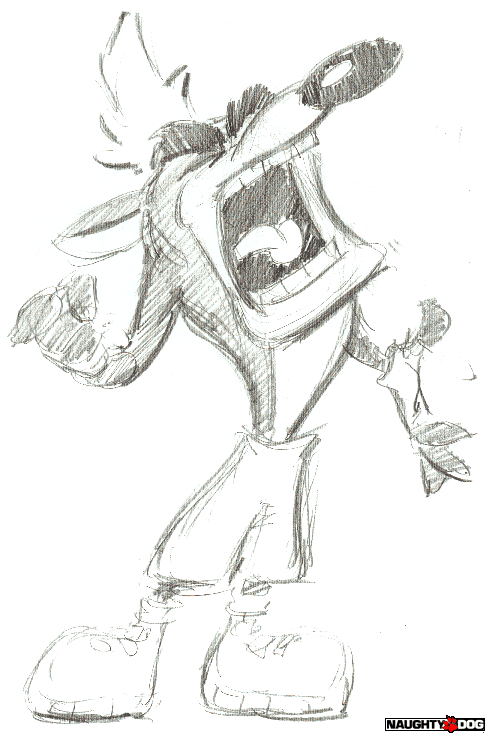
The first real Crash

With Crash Bandicoot, the notion of setting was much simpler, but no less important. Back in 1994 when we were visualizing our 3D platform game we wanted to follow in the tradition of using a quasi-animal character. Various factors led us to a sort of Looney Tunes style character design and world. In the early 90s, voice for video game characters was technologically dicey and tended to be cheesy, so we thought to convey strong personality through animation.  We also liked the idea of taking a real animal that had a distinct name, yet one rare enough that few people knew what it looked like. In this way, we hoped to “hijack” the animals name and have our character become representative of this real animal. This quest for a cute, well named, and rare animal led us to the Bandicoot, and hence to an isolated island setting full of exotic animals. In the cartoon space it seemed natural for the villain to be an evil genius, misunderstood, surrounded by idiot minions that bungle his brilliant plans :-) . Doctor Neo Cortex was born. Since normal rodents are a bit mousy, and not necessarily that cool, we gave him the Evolve-O-Ray program in which he was “enhancing” the animal life of his island. Crash took form as the goofy “bungled” product of these experiments, fighting, in his goofy way, to protect the natural world from this renegade scientific program.

Snowball on the hill

Once you work out the basic creative concept for a big project, the rest of the ideas tend to flow outward from these first principles.

In world of The Darkening Dream I drew on historical and religious settings, people, magics, and sects to provide allies and enemies, creating their motivations out of their own peculiar frameworks. With Crash, the cartoon style of the world and the practical needs of the platform game drove decisions. Platform games (and many other game types) have Bosses and Sub-bosses. If Neo Cortex is the boss, then he needed henchmen (mutated animals and lab assistants) and middle management (the various Sub-boss animals). His island needed varied settings (read variety), but it was a jungle island, so this led us to island-compatible settings like beach, jungle, caves, etc.

In previous posts I discussed the differing importance of story to novels and video games, the origins of the magic in The Darkening Dream, and the history of Crash Bandicoot. Sometime in the future, I’ll probably continue this series by talking about production itself.

Related posts:

  1. How do I get a job designing video games?
  2. Games, Novels, and Story
  3. So you want to be a video game programmer? – part 1 – Why
  4. So you want to be a video game programmer? – part 2 – Specs
  5. Some Ideas Never Die
By: agavin
Comments (14)
Posted in: Darkening Dream, Games
Tagged as: Andy Gavin, Bandicoot, Crash Bandicoot, Doctor Neo Cortex, Donkey Kong Country, Fiction, Games, Hermione Granger, Ideas, Neo Cortex, Platform game, The Darkening Dream
  • Gabriele

    I really wish one day to see another Crash Bandicoot game that continue your games.
    Do you think that Jason Rubin can try to buy the franchise now that he is president of THQ?
    It would be awesome if you and Jason can work again with Crash.

  • http://twitter.com/KristenKoster Kristen Koster

    One of the things we absolutely loved about Crash Bandicoot was the range of emotions in the animations. We’d sit and let the game idle, just to see what he’d do!

    Very interesting post for me, Andy, especially having come to writing novels from a similar roundabout path through the gaming industry!

    • http://all-things-andy-gavin.com Andy Gavin

      :-)

      Sent from my iPad

  • Alex

    Yes, I remember this game very well and when the Sony Playstation first came out it was $900, then dropped sharply after that. At the time I was working for a company that sold many different consoles, accessories, games, game magazines and strategy guides both new and used. The name of the place was called Funco, Inc. (Minneapolis Support Office / MSO / Corp. HQ, actually located in Eden Prairie, MN). I was working in the Refurbishing Department as well as other departments within the company at the time. This was a staple at my desk in the lab, Crash Bandicoot, as well as many other games.

    I learned the MIPS R3000 instruction set just so I could code test routines to test the hardware as not every game did use 100% of the PS One capabilities at the time. Those were some the greatest times of my life, repairing games (polishing CD / DVD games and working on the circuit boards of the console and on the cartridge based games).

    • http://all-things-andy-gavin.com Andy Gavin

      Actually, the PS1 was $299 in America from the beginning, then went down.
      I know Funco :-)

      • Alex

        It’s not what it was quoted to me when it first came in the door, Andy. The price @ $299, is was the retail value after we got a mass shipment in from Sony. Yes, then it went down. Meaning the suggested retail price was $299 and Funco, Inc. actually followed that for once. I am all for maximizing profits but some of the units they used to sell things for were a tad bit out of line, even if they were used vs, new.

        I was one of the first in the company that was able to “touch” the new console at the time, beside the then in house game magazine called, Game Informer. Of course they got their paws on it before me.

  • Alex

    The PS One was $900 when it first came out, the Crash Bandicoot was less then $65 when it first came out or at least according to our list prices it was that.

  • Drake

    crash bandicoot in my heart for ever thank ND

  • http://twitter.com/JoeRoh Joseph V Roharik

    Awesome article! Very cool to learn the process you went through with Crash Bandicoot, it’s one of my favorite experiences :) . I’ve posted an article about a similar topic. I’d strongly appreciate if you checked it out and left an opinion! http://wp.me/p3avZQ-i

    • http://all-things-andy-gavin.com Andy Gavin

      It’s a little abstract. The intro has me itching to know what you found in common between the top franchises. And then it might also be useful to understand what percentage of failures also had these properties (as it might be possible that the commonalities were in fact just common)

      • http://twitter.com/JoeRoh Joseph V Roharik

        The fundamentals that appeal to people through the universes reveal patterns, and people absolutely love patterns. They help us learn. Thank you for taking a look and for leaving me feedback, it’s very much appreciated!

        • http://all-things-andy-gavin.com Andy Gavin

          That too is fairly abstract :-) Although I too admit to being an eager pattern hunter.

  • http://twitter.com/Valdarez Valdarez

    One of the aspects to keep in mind for characters is what drives or motivates them and the conflict in which that is derived — http://en.wikipedia.org/wiki/Conflict_%28narrative%29. Too many writers, and especially video games, completely lose focus, or go off in directions that simply don’t fit with the story or story line at hand.

    • http://all-things-andy-gavin.com Andy Gavin

      Yes, it just isn’t character driven, but instead action or scene driven, which isn’t really very interesting

All Things Andy Gavin
Copyright © 2013 All Rights Reserved
Programmed by Andy Gavin